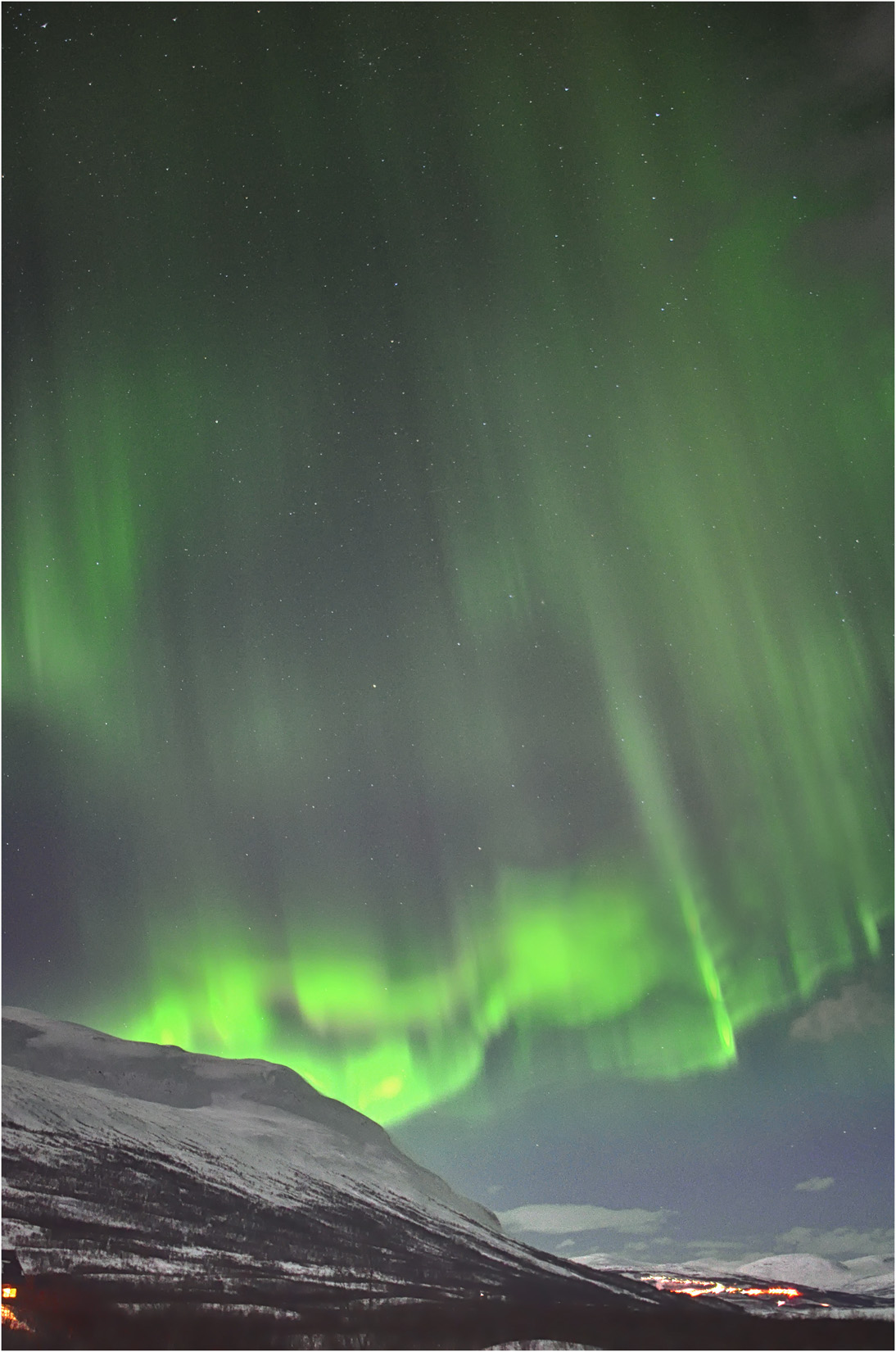
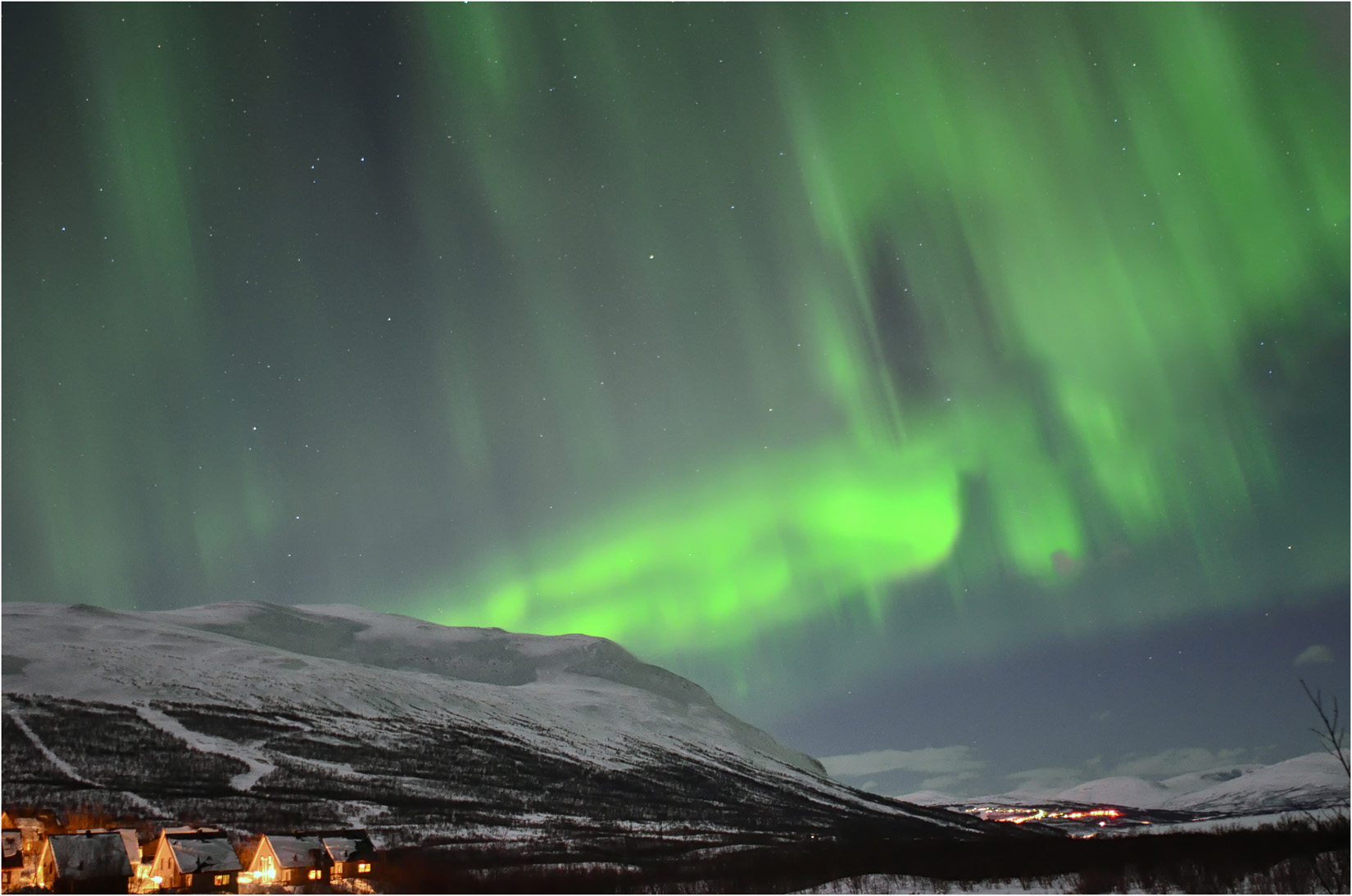
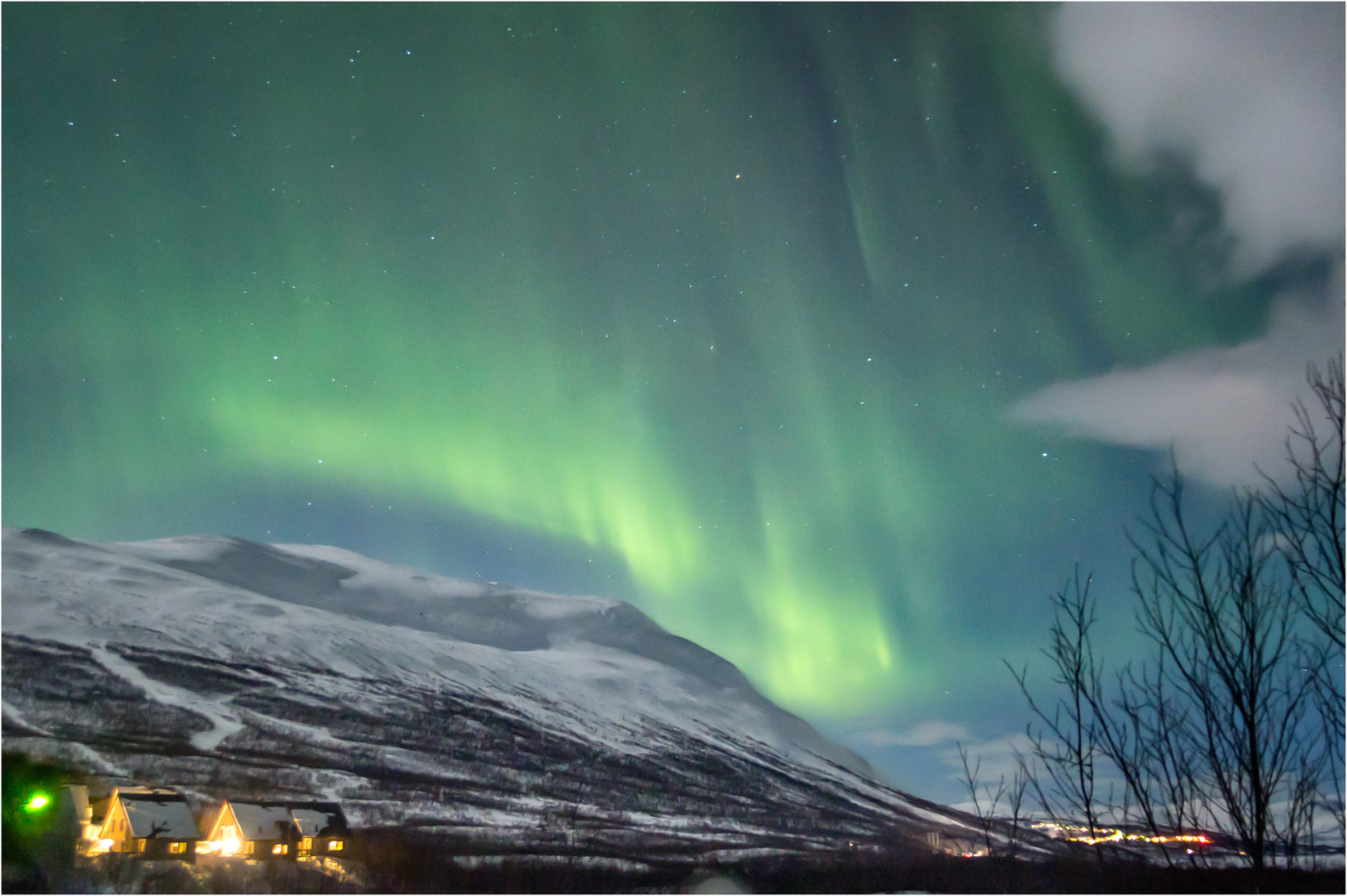
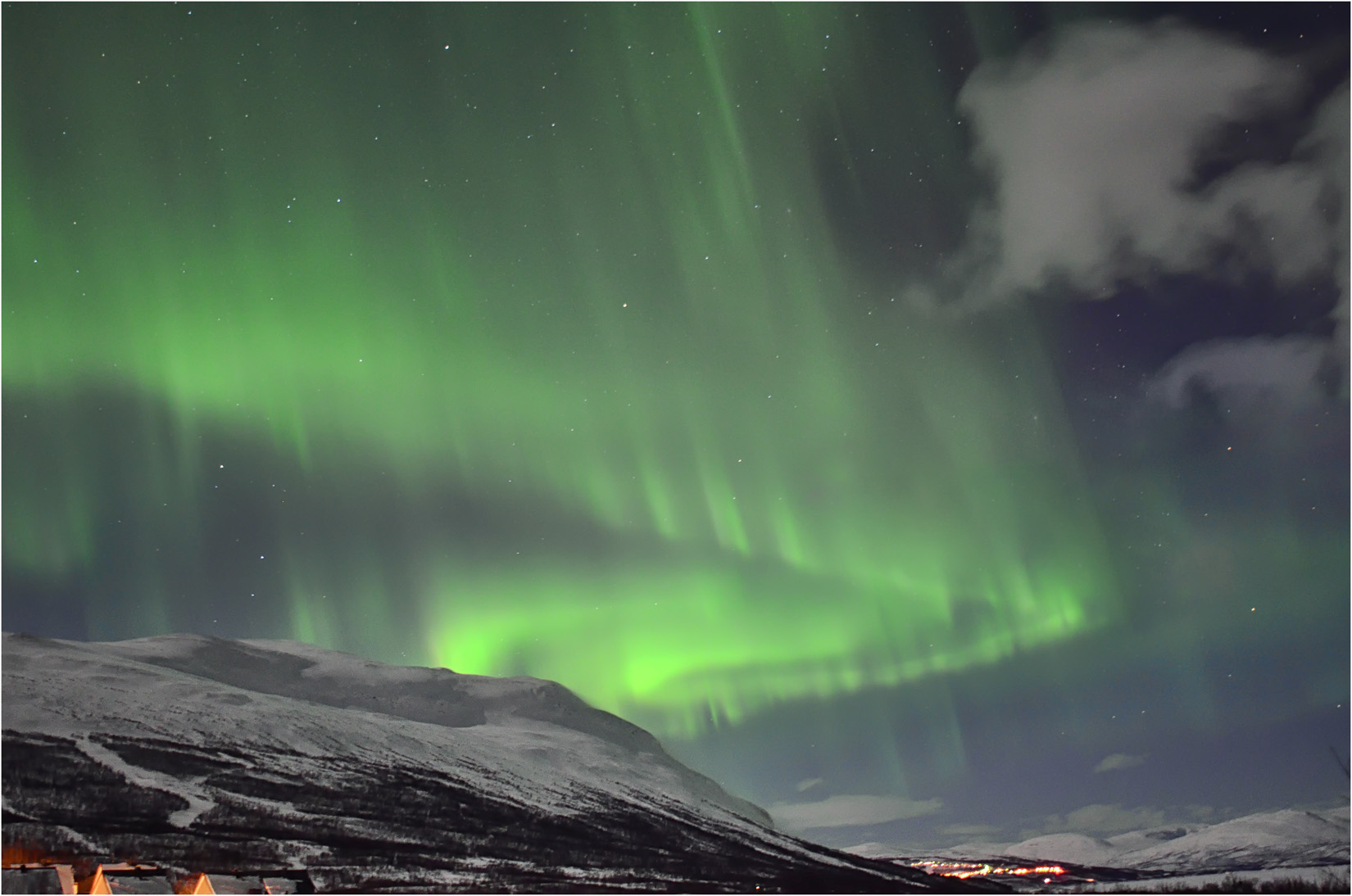
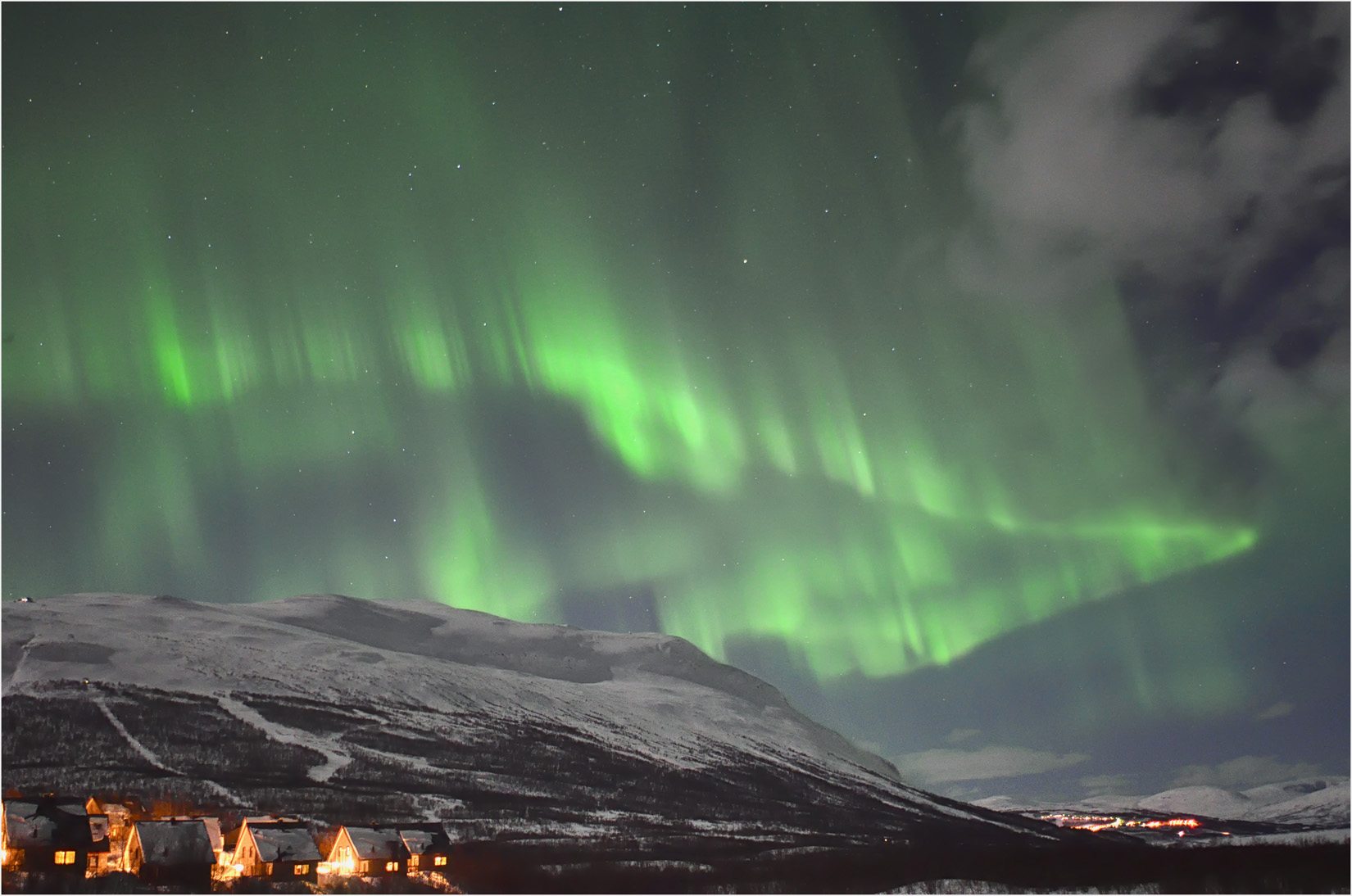
Abisko is a small village in the north of Sweden located on Lake Tortnetrask, about 55 miles NW of Kiruna. The local geography of the lake and surrounding mountains can create a localised ‘blue hole’ – a condition where the sky over the lake can be clear, even when the surrounding mountains are covered by cloud. This, together with the absence of light pollution, means that Abisko is one of the best locations in Europe for viewing the Aurora Borealis. Numerous tour operators therefore feature Abisko as a winter destination for viewing the Aurora. Our holiday included an evening on the shores of the lake with some professional photographers to offer guidance, and we were fortunate that this coincided with a spectacular aurora display.
Our other activities at Abisko included a trip to Narvik on the Norwegian coast – famous as a battle location during WWII, and a gentle walk through the Abisko National Park, out onto the ice of Lake Tornetrask.
Narvik Excursion
The town of Narvik was established at the end of the 19th Century as the terminus of the Ofoten railway which brings iron ore from Kiruna in Sweden. The town is also famous as a WWII battle location. In spring 1940, Narvik and the surrounding area was the site of both naval and land battles between Allied and German forces due to the strategic importance of the railway and iron ore that it carried. Although the Allied forces were largely victorious, they were forced to withdraw from Narvik after the fall of France due to the need to re-deploy troops elsewhere.
The day of our trip to Narvik was very overcast, which meant we missed out on much of the scenery along the way, however we did make a few stops along the way, the first of which was to have a look at a reindeer herd. Reindeer herding is an ancient way of life that is still practised by a small number of native Sami people, though today they mostly use snow mobiles to follow the herds.
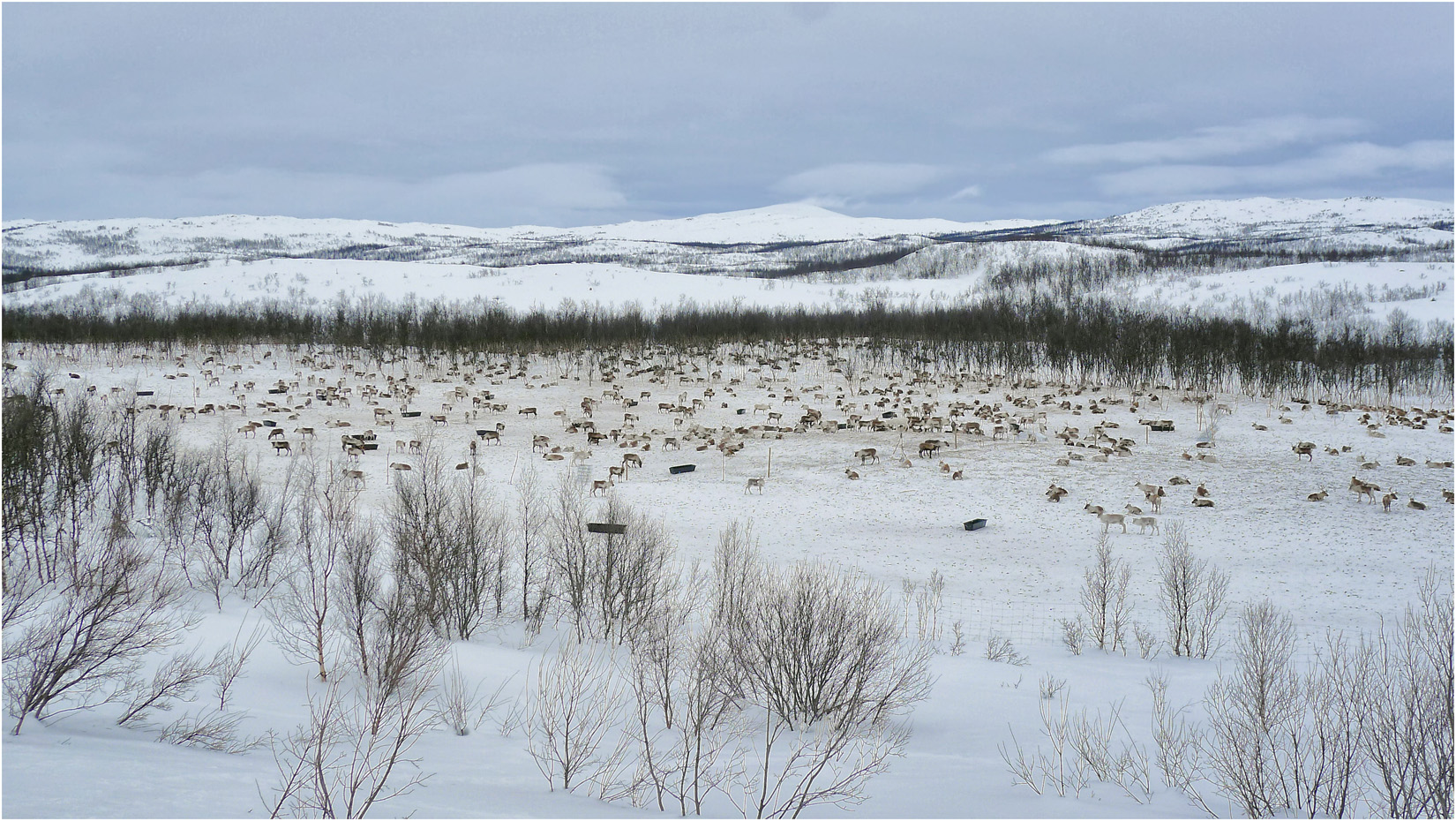
Reindeer Herd
Our next stop was at the border with Norway. As Norway is not a part of the EU, the border is a proper customs boundary. We had come across evidence of this as we had visited an enormous sweet shop in Abisko. The reason for such a large shop in a small Swedish village was to cater for people coming across from Norway to take advantage of the cheaper Swedish prices for sweets and soft drinks.
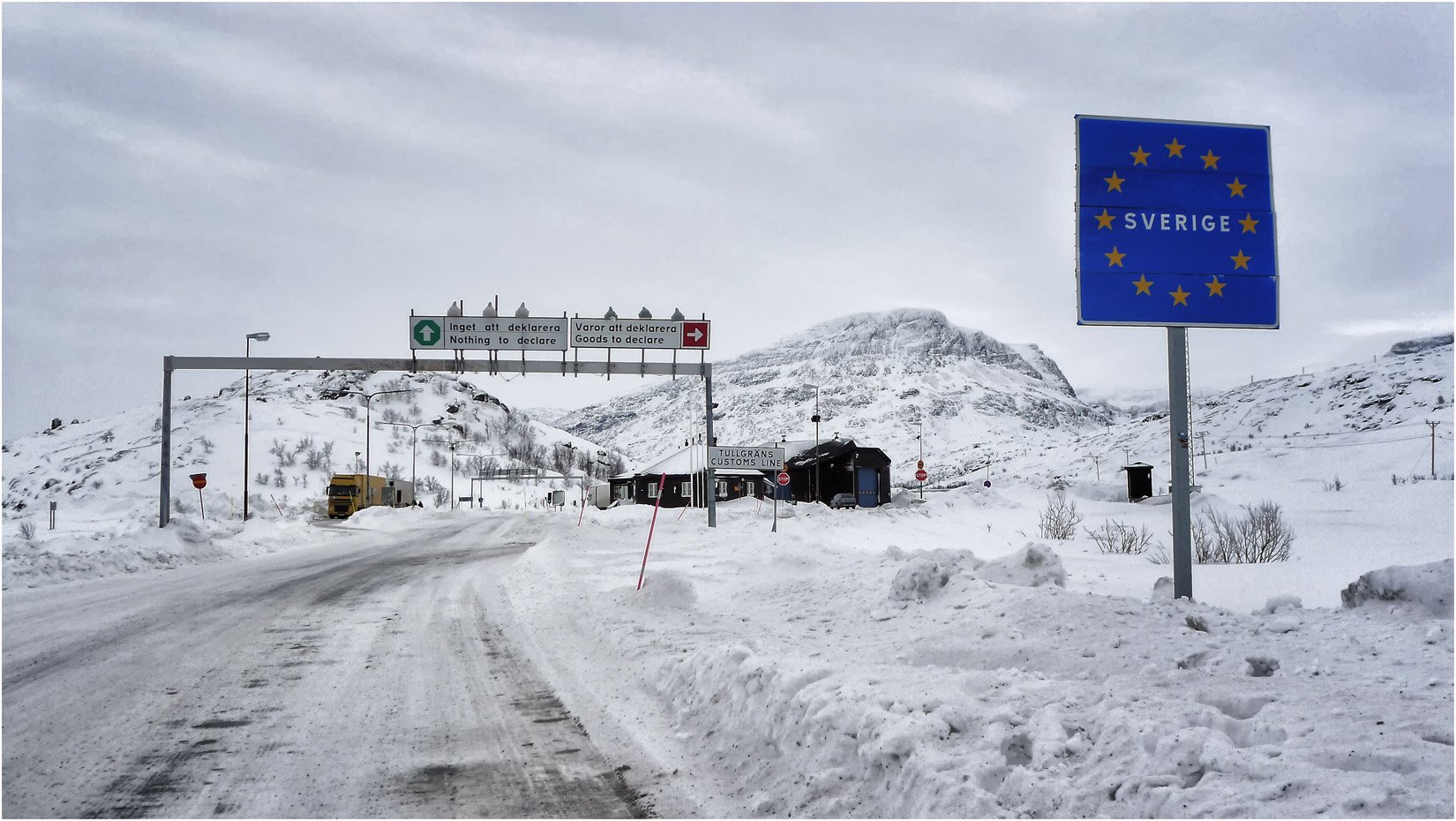
Entering Norway
We then visited an abandoned building half buried in snow. This was once a hotel and restaurant, and there was also a small wildlife park at this location, but today the site is abandoned.
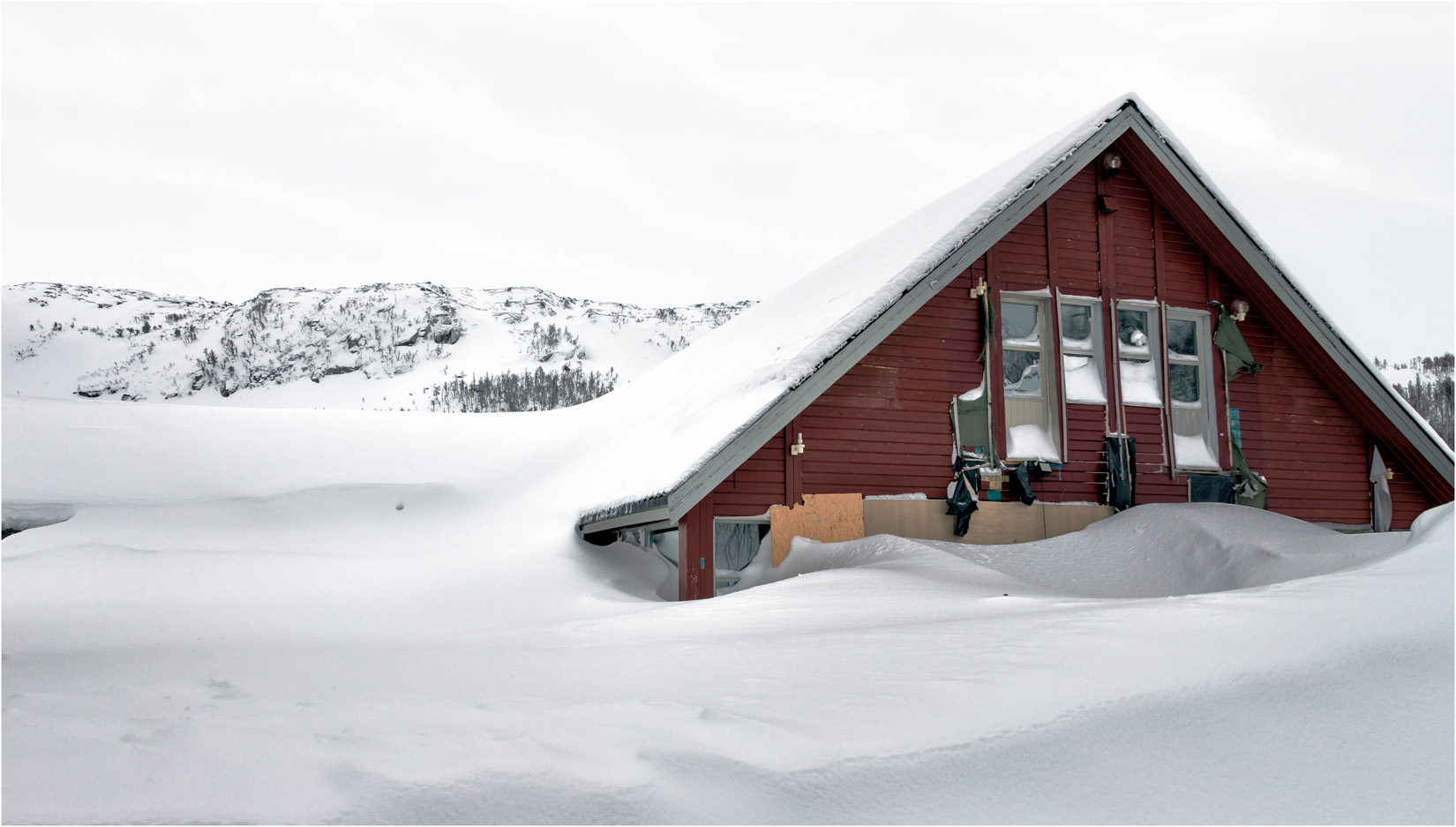
An Abandoned Shop
The main reason for stopping was the large troll that advertised the location, however it appears the troll is no longer there – perhaps he has found a new home?
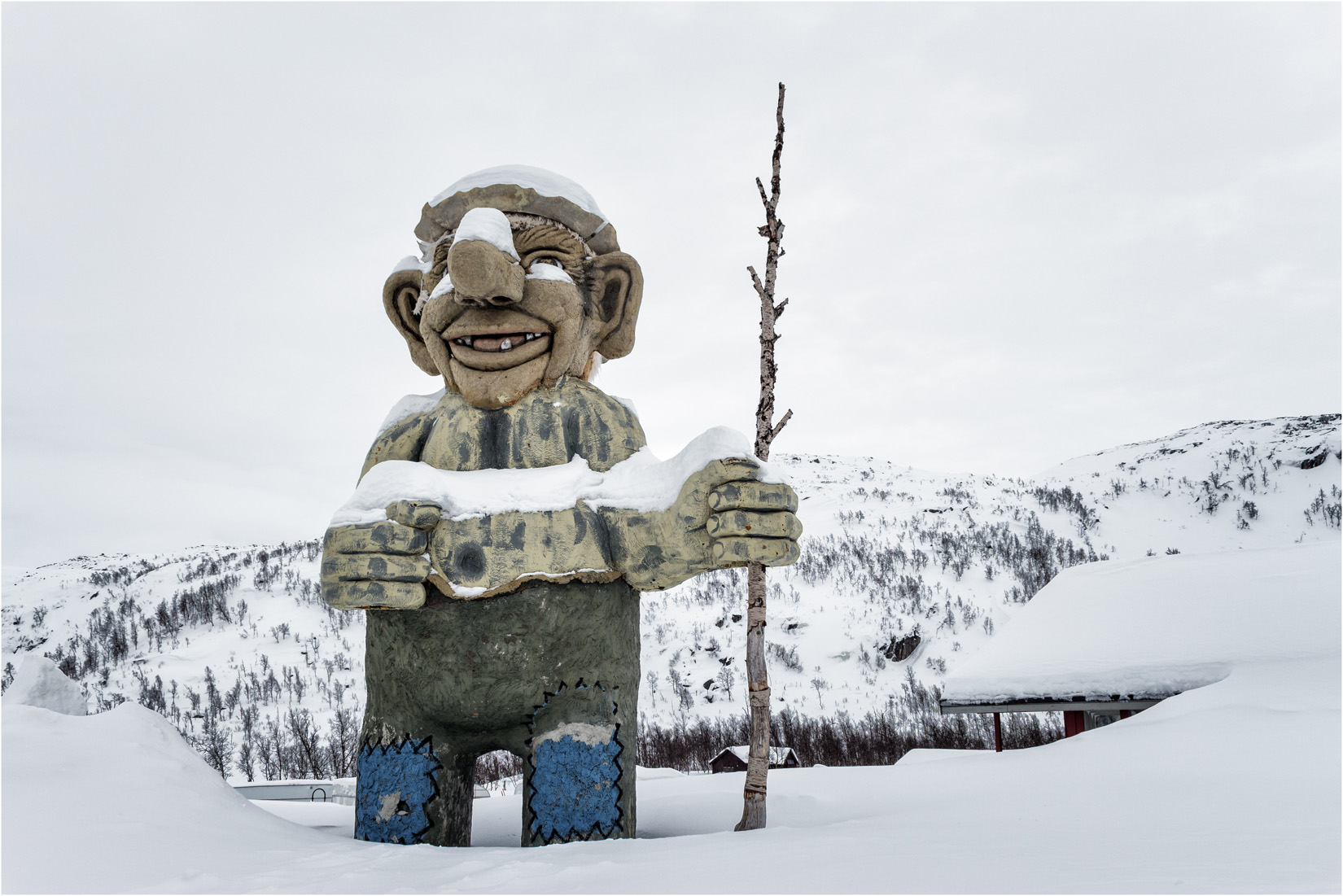
A Large Troll
Our final stop was at the Rombaksfjord. From a viewpoint above the fjord we could see the Ofoten railway cutting across the hillside. This railway was constructed at the end of the 19th century to transport iron ore from Kiruna to the ice free Norwegian coast, and in its day was a significant feat of engineering. Today, the railway boasts the world’s most powerful electric locomotives, capable of pulling 68 wagons each loaded with 100 Tonnes of iron ore across the mountainous terrain. Due to the very heavy wagons, the track is designed to take the highest axle load in Europe.
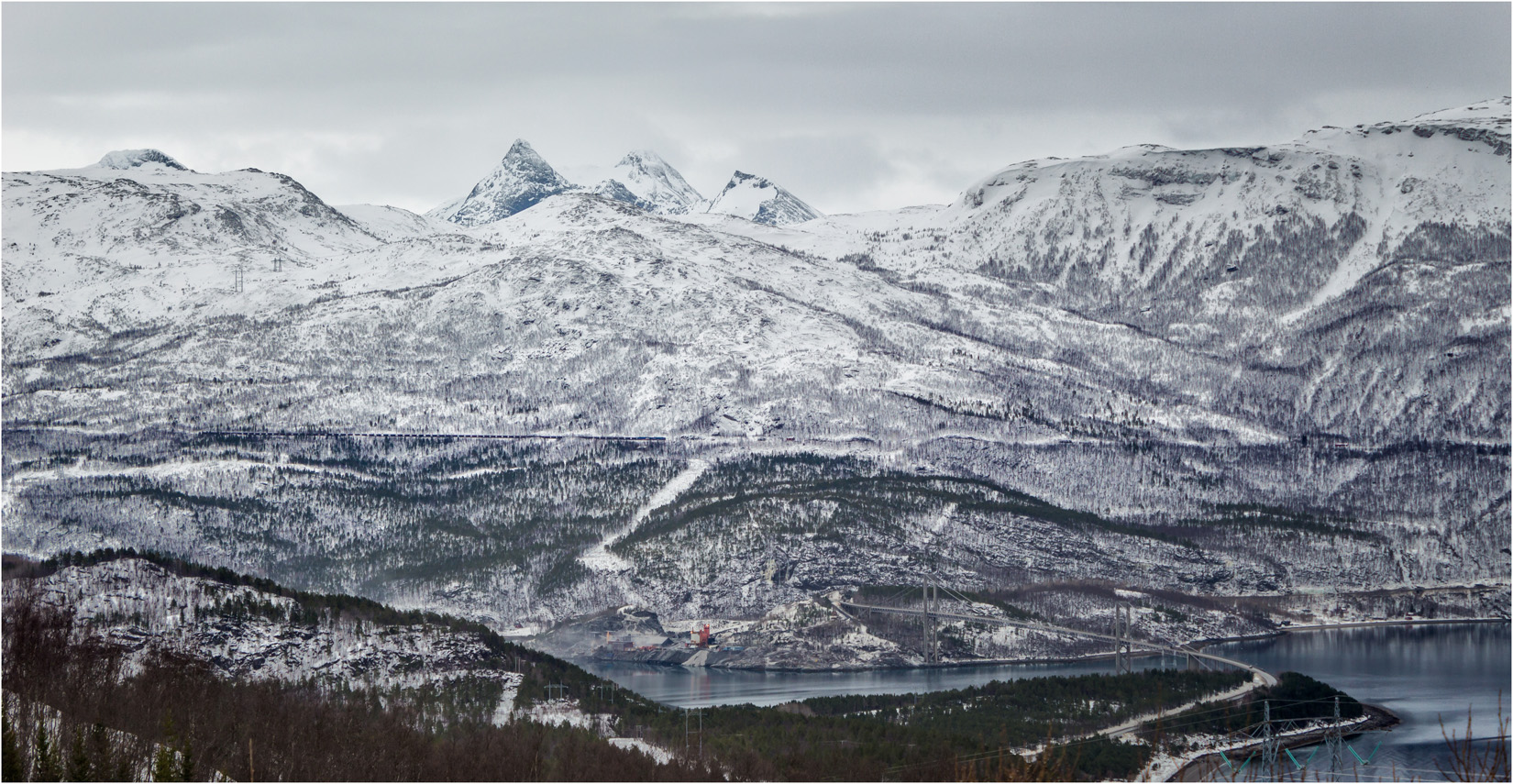
The Rombaks Fjord and Ofoten Railway
Despite the cast weather, we managed some atmospheric shots at the head of the fjord.
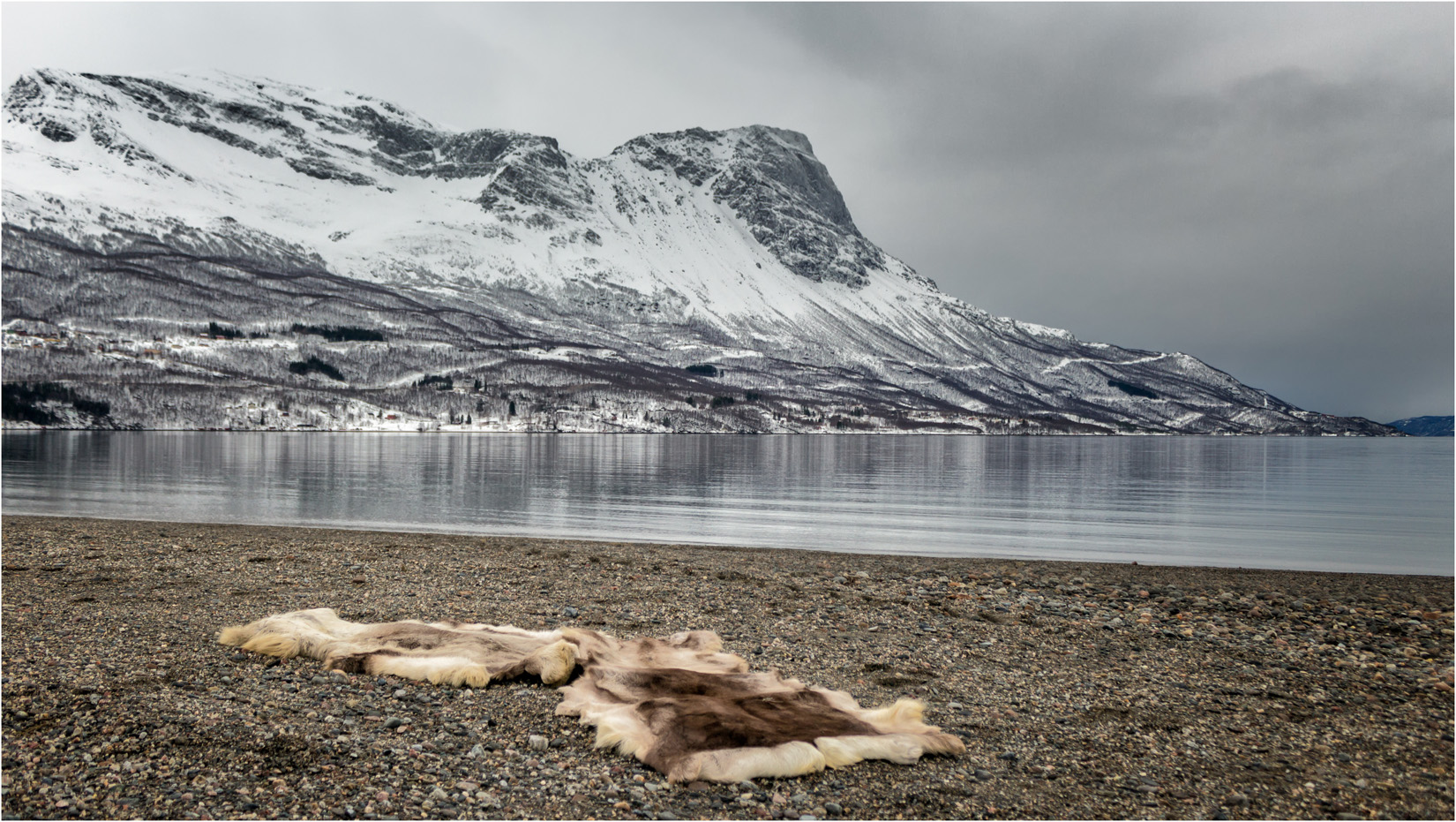
The Rombaksfjord near Narvik
We continued on to Narvik for lunch, but in the afternoon the weather closed in even more, so there was no opportunity for any photo stops on the return journey to Abisko.
Aurora At Abisko
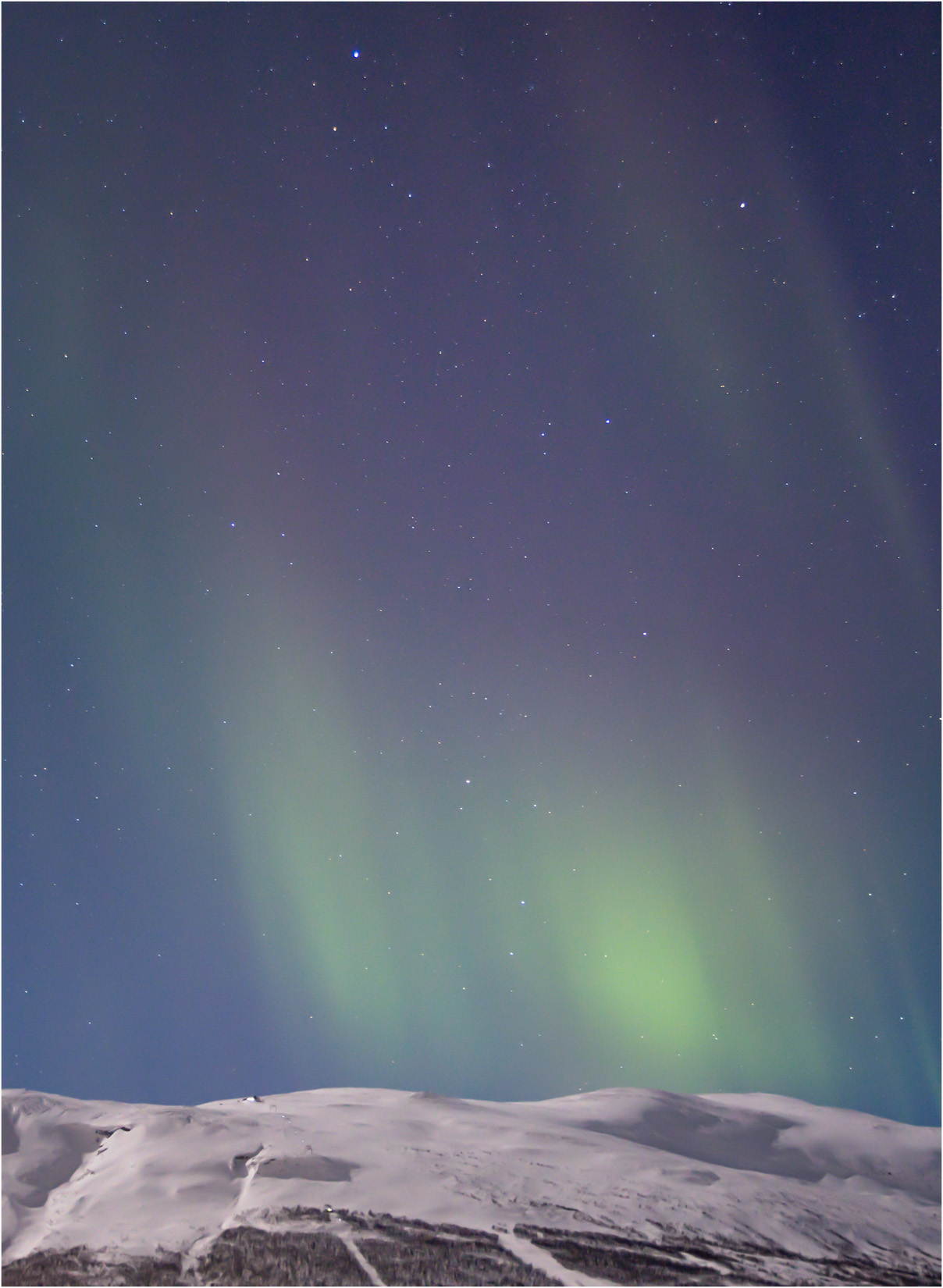
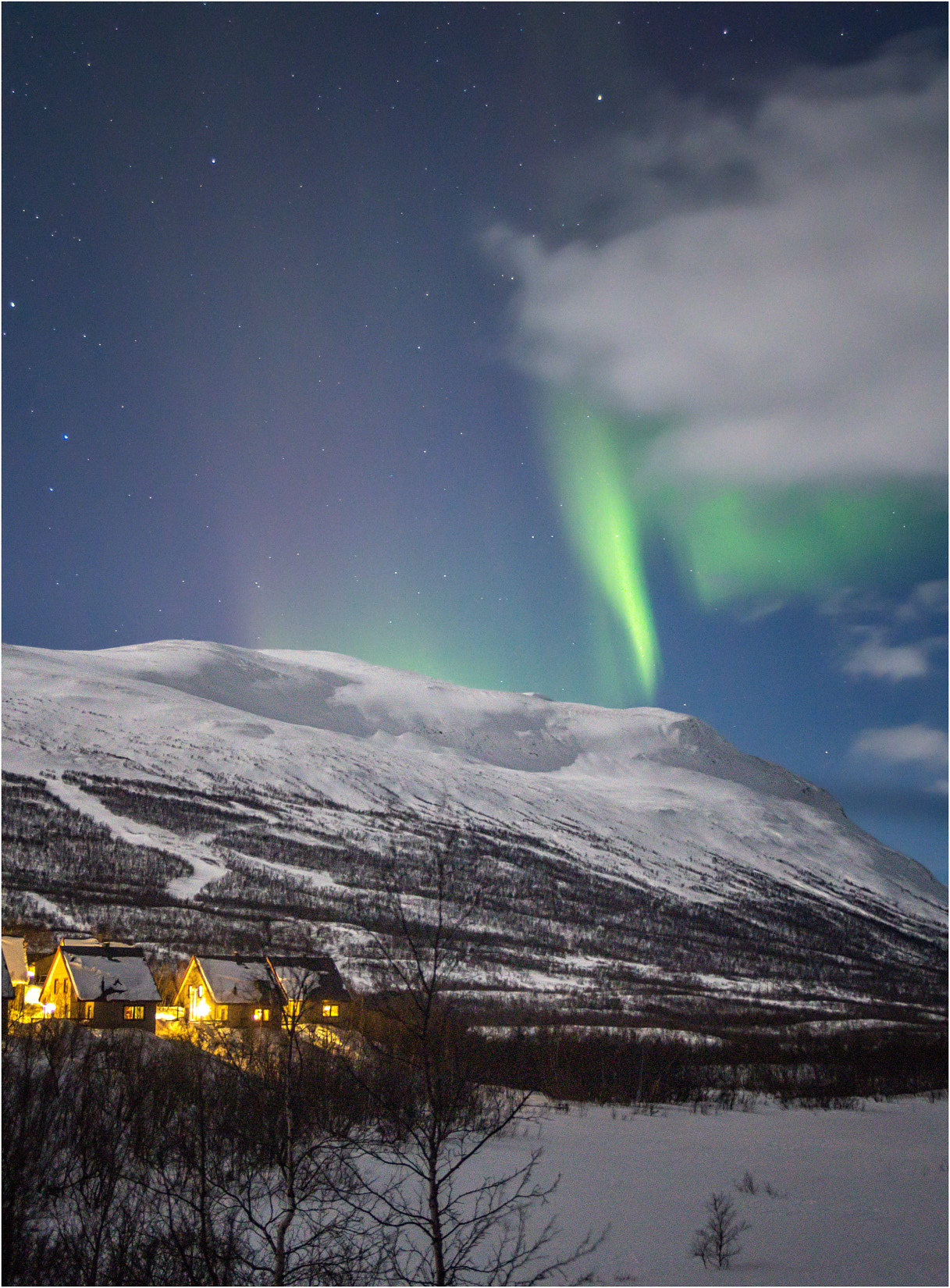
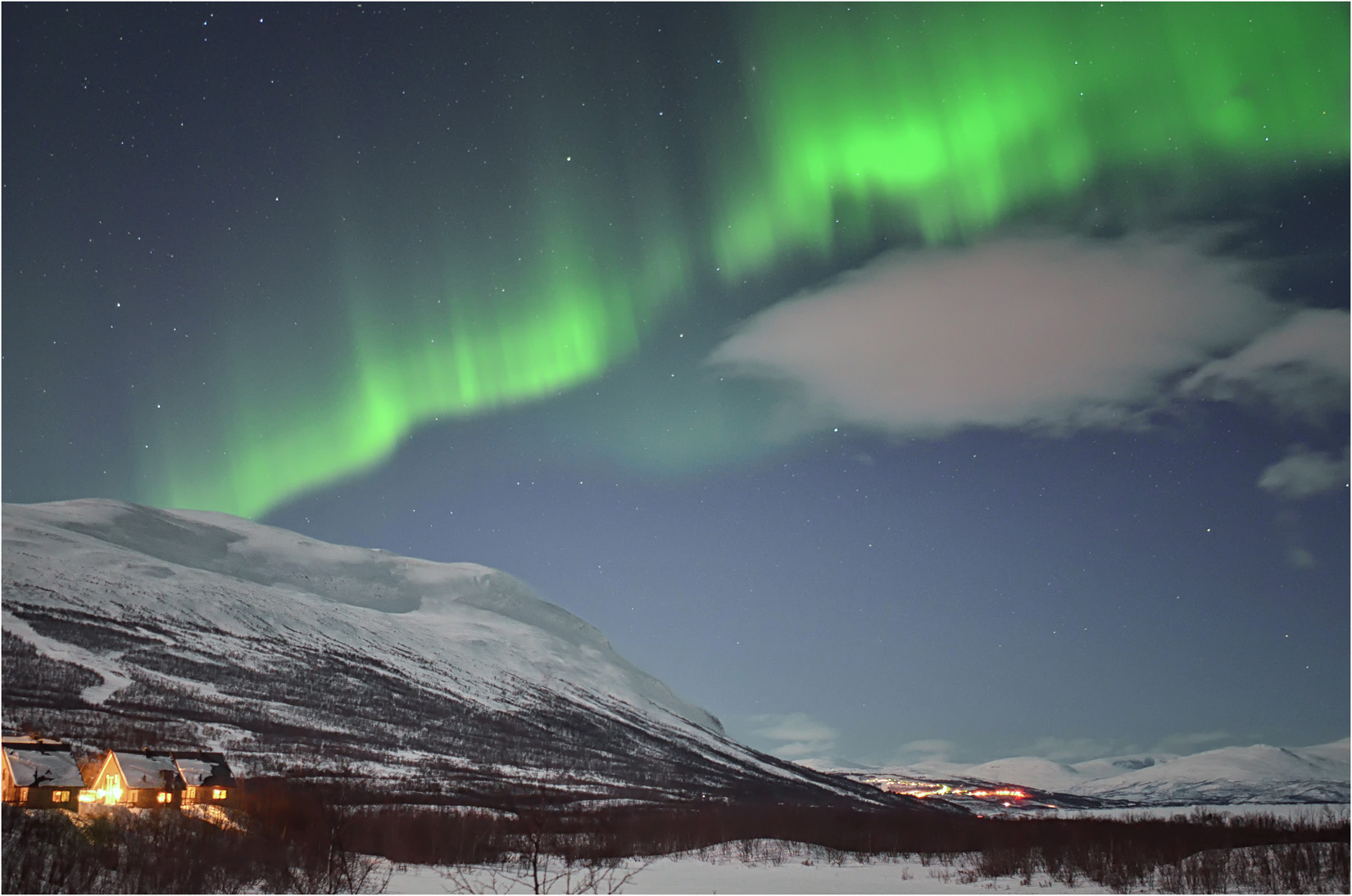
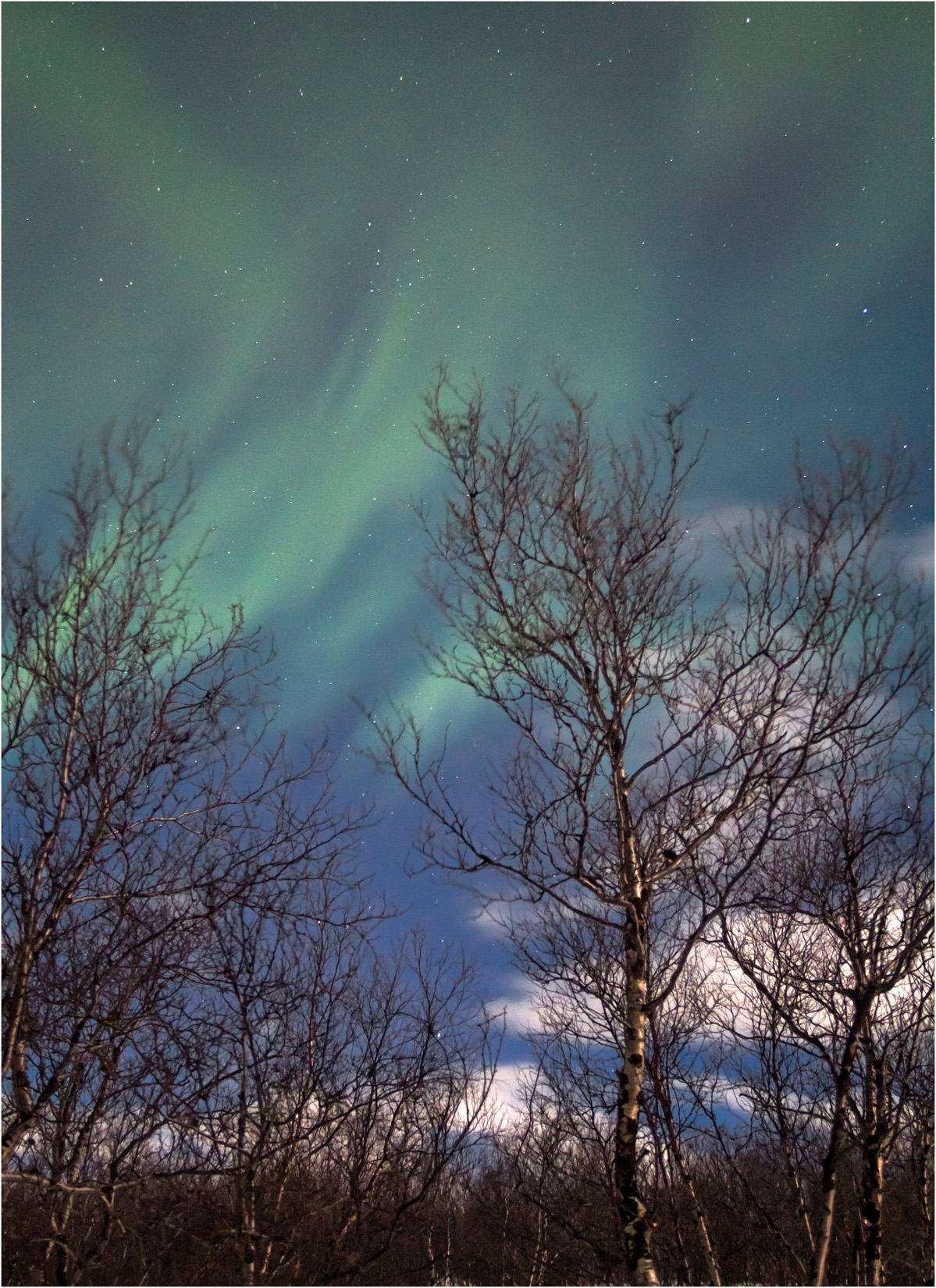
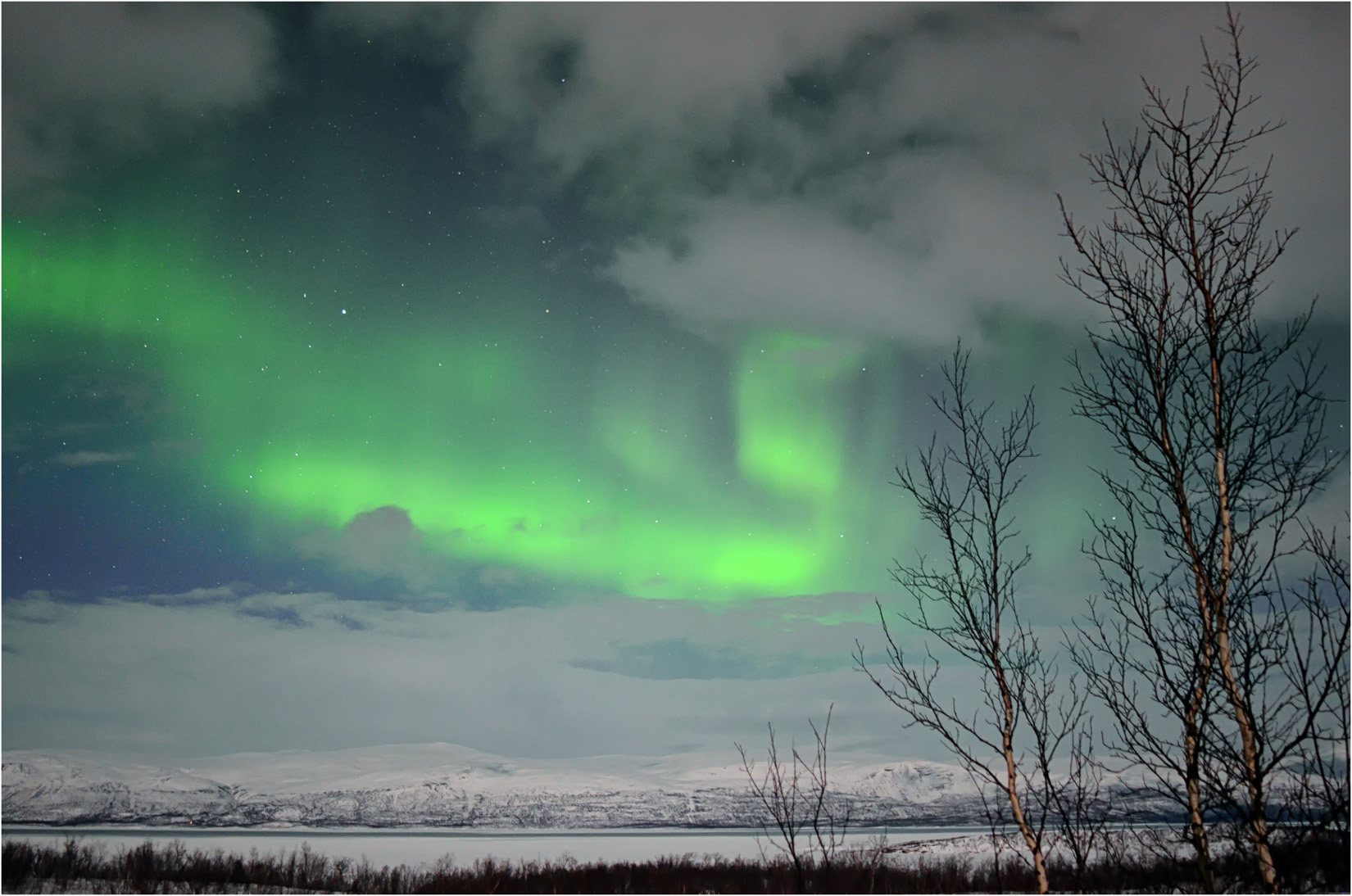
The evening after the Narvik trip was scheduled as a photography evening, hoping to catch the aurora. After the bad weather during the day, we were sceptical we would see anything, but the skies cleared and the aurora turned up right on cue! There were a couple of professional photographers leading our group, and they took us to a location on the shores of Lake Abisco. From there we had views of the mountains and ski slopes above the village, and it was in this direction that the aurora first appeared. Gradually the display built up, until there were vivid swirls over the mountains. A little later, and fainter aurora also began to appear over the lake.
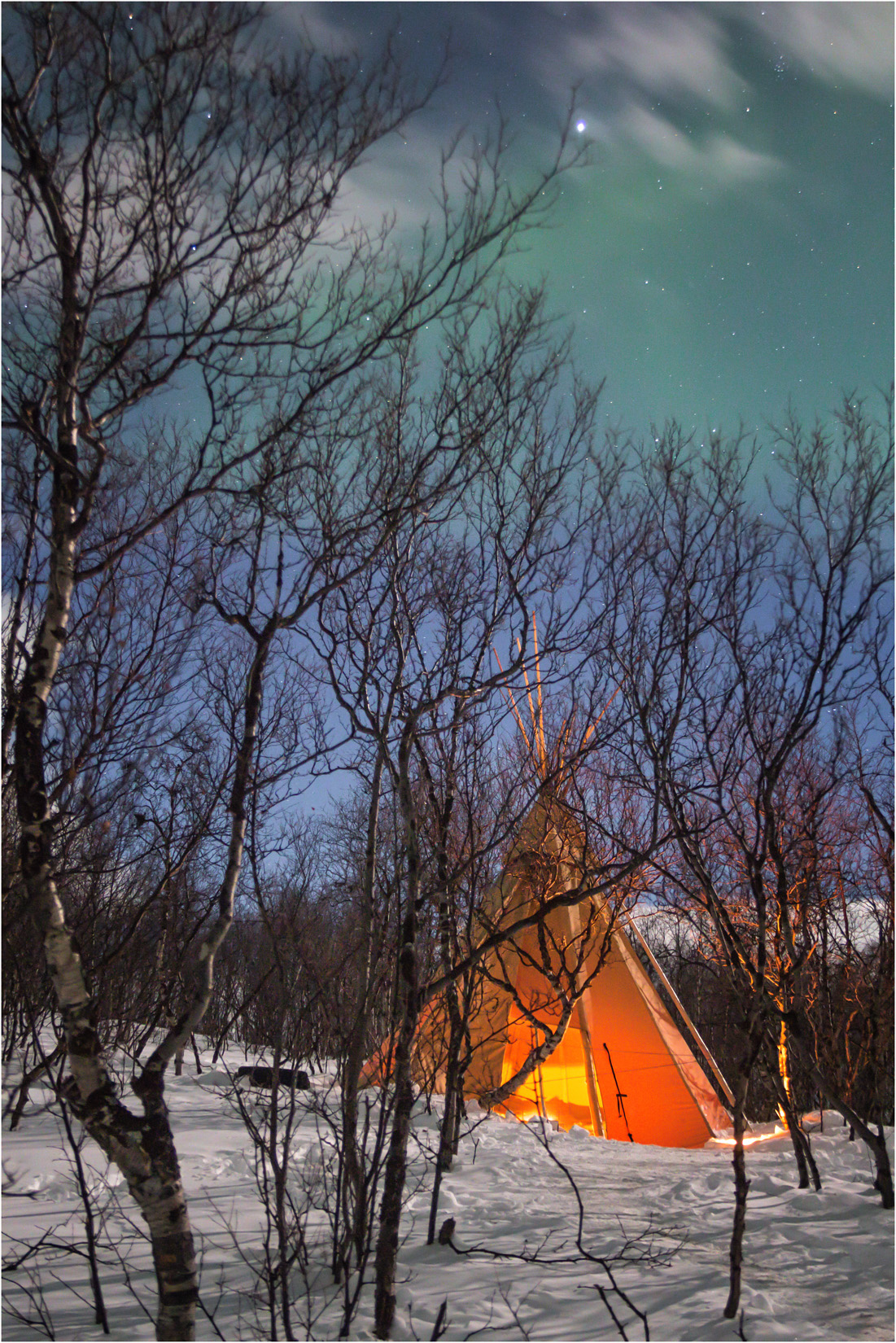
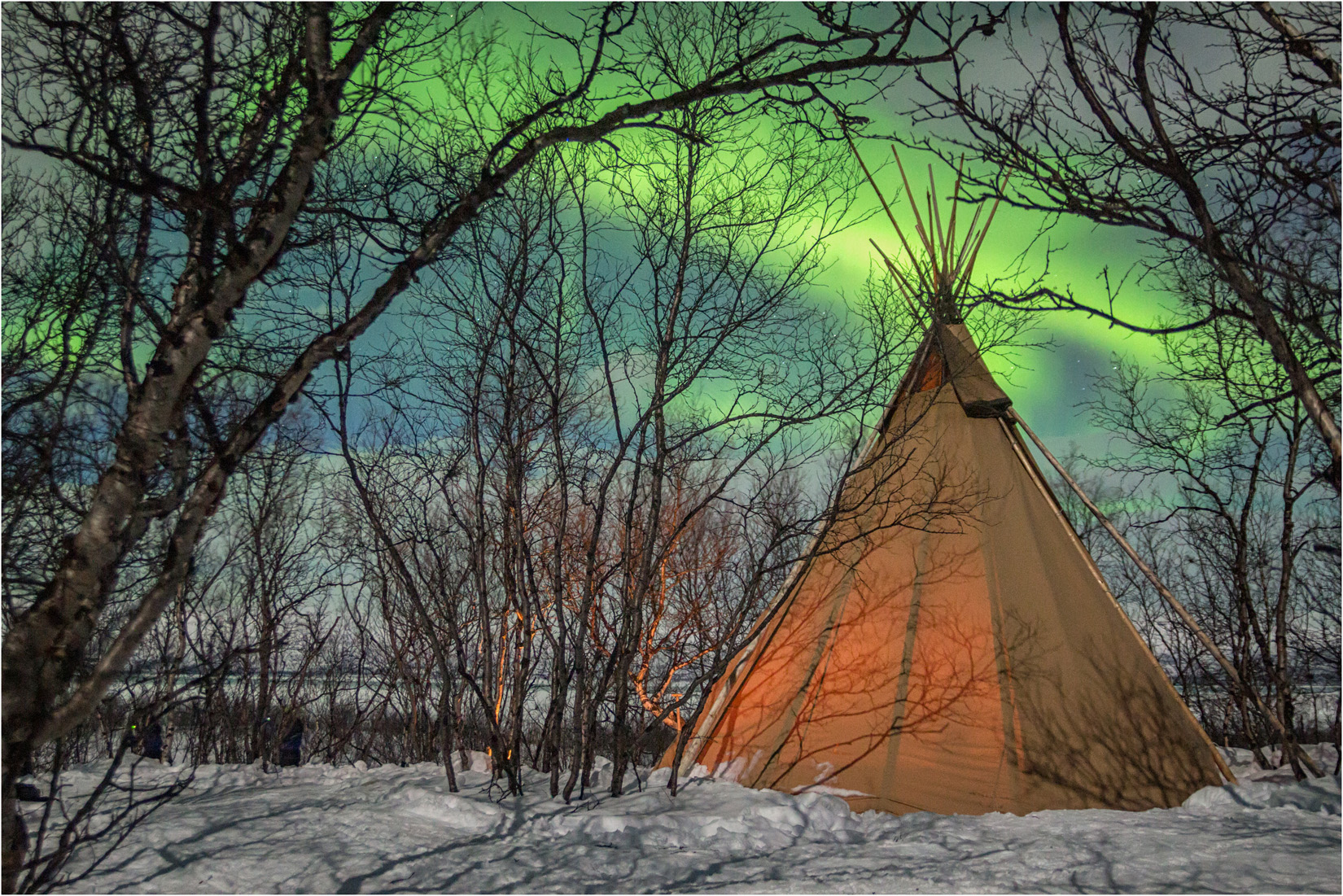
Our photographer guides also had a tent set up in the forest to be used in the event of bad weather and although we did not use it, it provided an interesting foreground subject for the aurora. Overall the display lasted about 2 hours and we were delighted that we had ticked off a major item on our bucket list.
After the evening however I had some disappointment however as I had left a skylight filter on my lens throughout the evening. Due to the very narrow frequency range of the aurora light, the light bouncing between the filter and lens produces circular interference fringes – concentric rings of light and dark bends. Fortunately both Carol and I were shooting images, so we still had a selection to choose from, but the lesson is clear – remove any filters when shooting the aurora!
Links to Other Sweden 2015 Pages