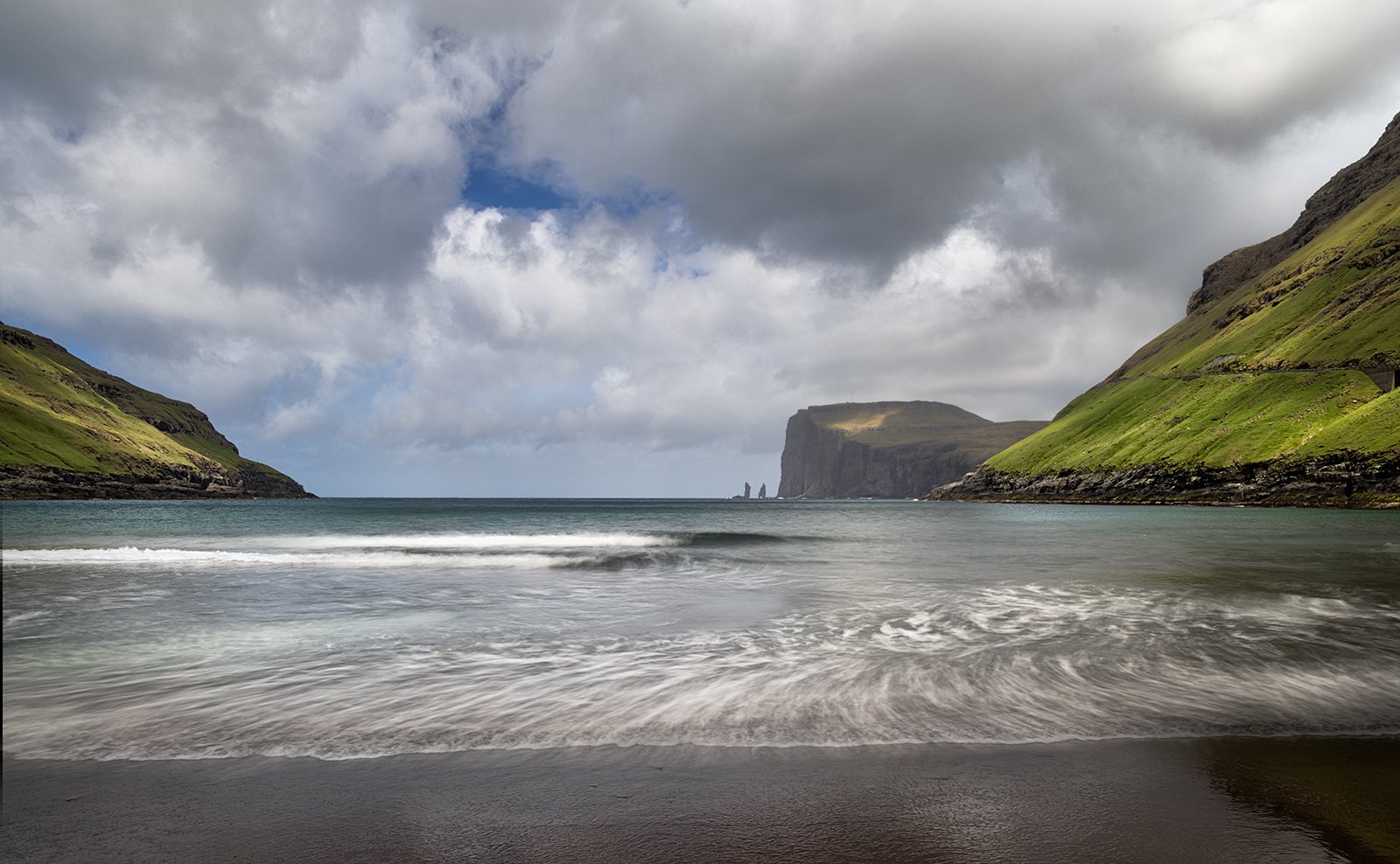
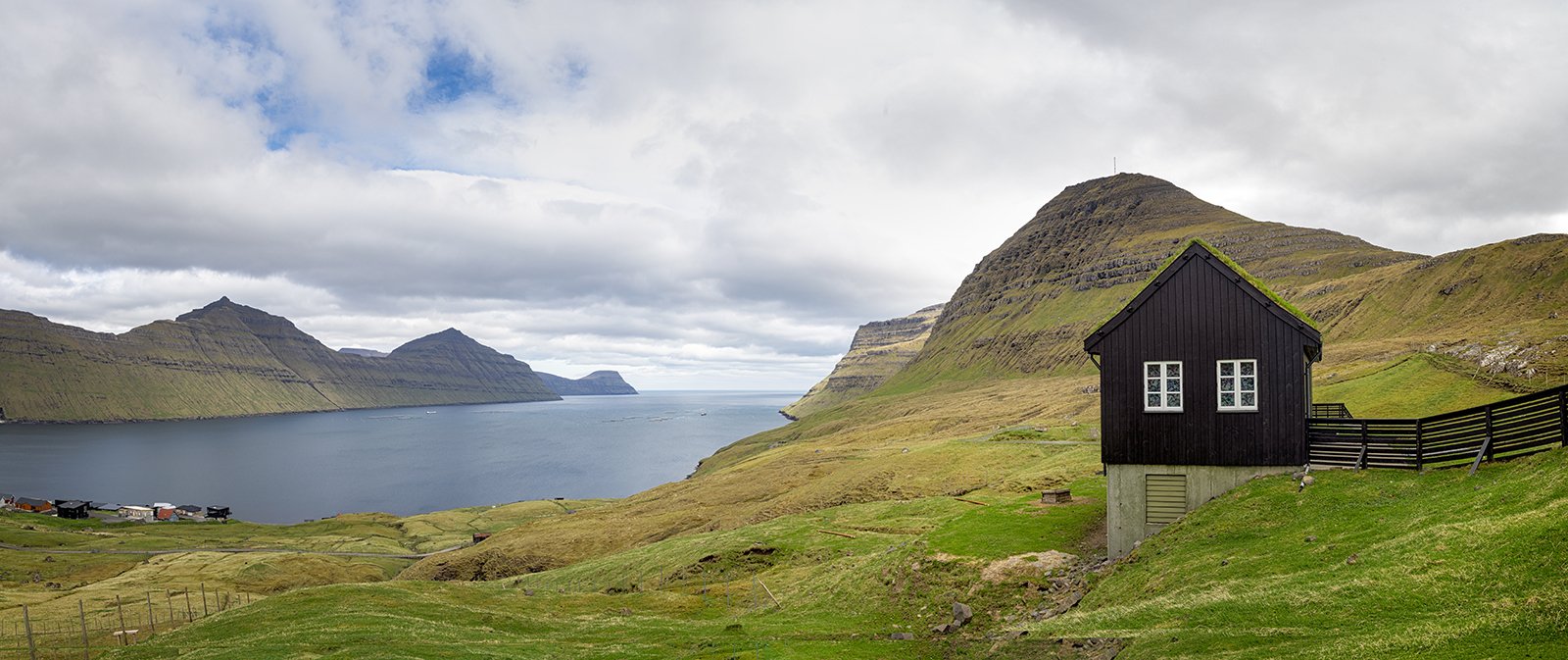
22026 – Faroe Islands
25th May 2026
Day 4 – Koltur and Kirkjubour
As our pre-planned itinerary we were scheduled to visit the small island of Koltur today. Koltur is the smallest of the inhabited Faroe Islands, but the farming community left the island in the 1980s. Today the island is preserved as a living museum and wildlife reserve, and there is just a single caretaker who lives on the island, swapping over every few weeks. There are two small settlements on the island which were occupied by two different families, and the story is that the families never co-operated with each other, but instead held a centuries old argument whose origins were lost in time.
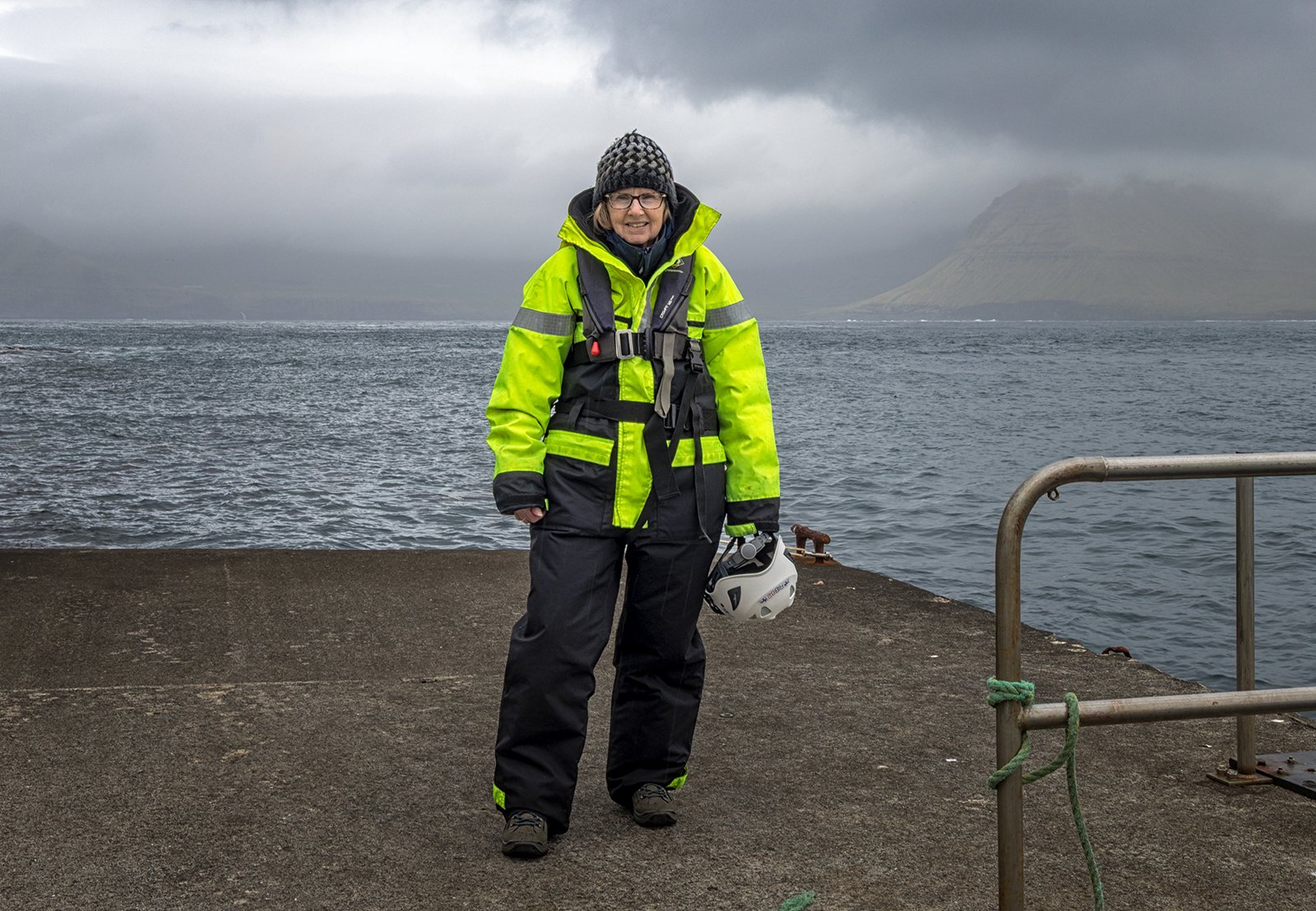
Visits to the island are run from the harbour of Gamlareitt on the west coast of Suderoy. What we did not know from the booking was that the boat ride was a high speed power-boat and we had to get fully kitted up in protective gear for the crossing.
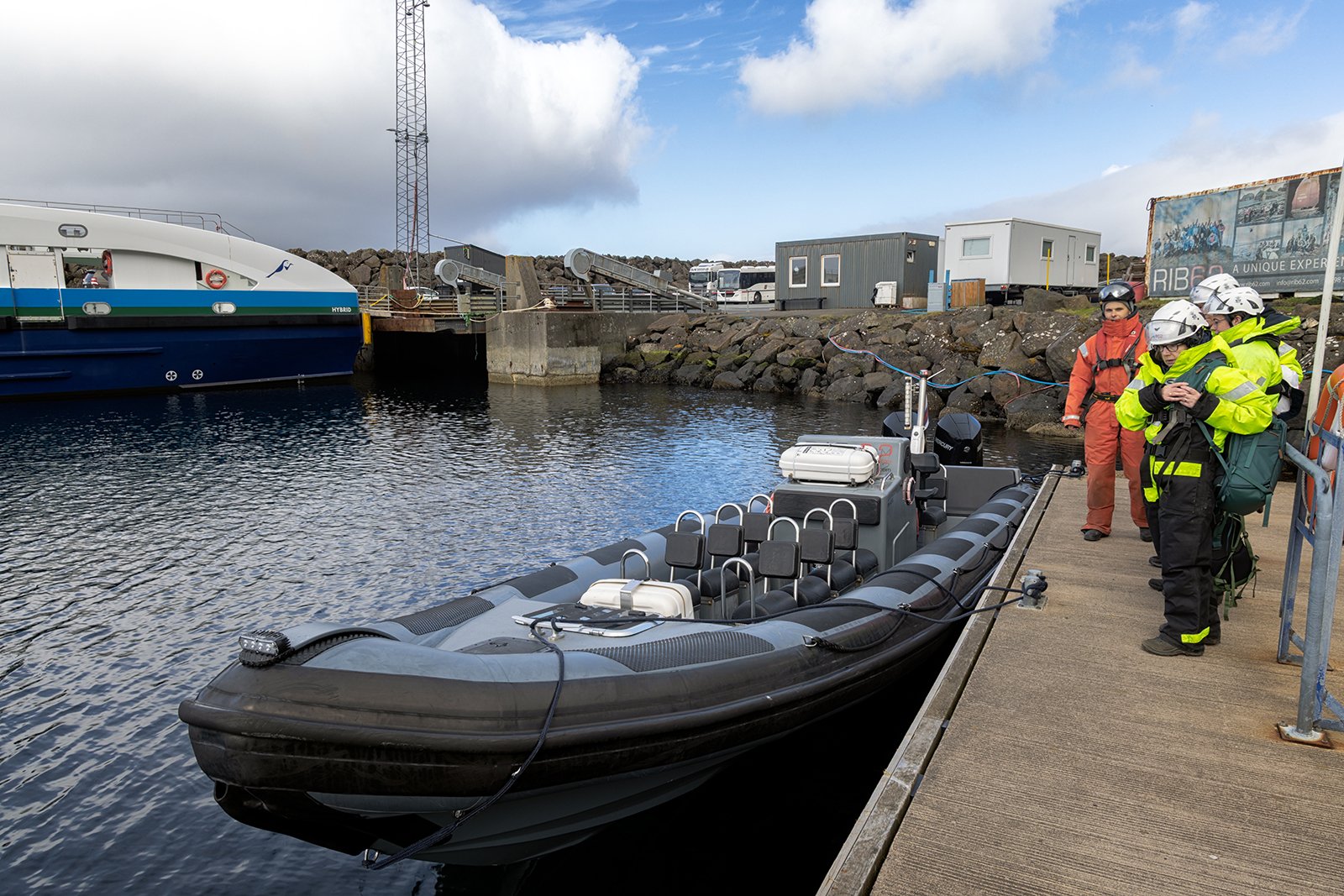
Preparing For The Trip To Koltur
When we arrived at the island we had another surprise as the way onto the island involved climbing up a ladder at the side of the jetty, which was some height above the boat. The technique was to wait until the swell lifted the boat, then jump up to the ladder, something I just managed, but Carol struggled with. I thought we would be returning to Gamlareitt, but eventually she managed the jump up.
Once safely on the island, our first stop was the Caretaker House, which looed a bit more recent than the other buildings on the island. The island has a hill at one end called Kolturshamar, which rises to over 1500ft behind the Caretaker House. Kolturshamar gives the island a formidable look in views from the north across the Vagar Fjord, but the south of the island is mostly flat, so provides grazing for the numerous sheep.
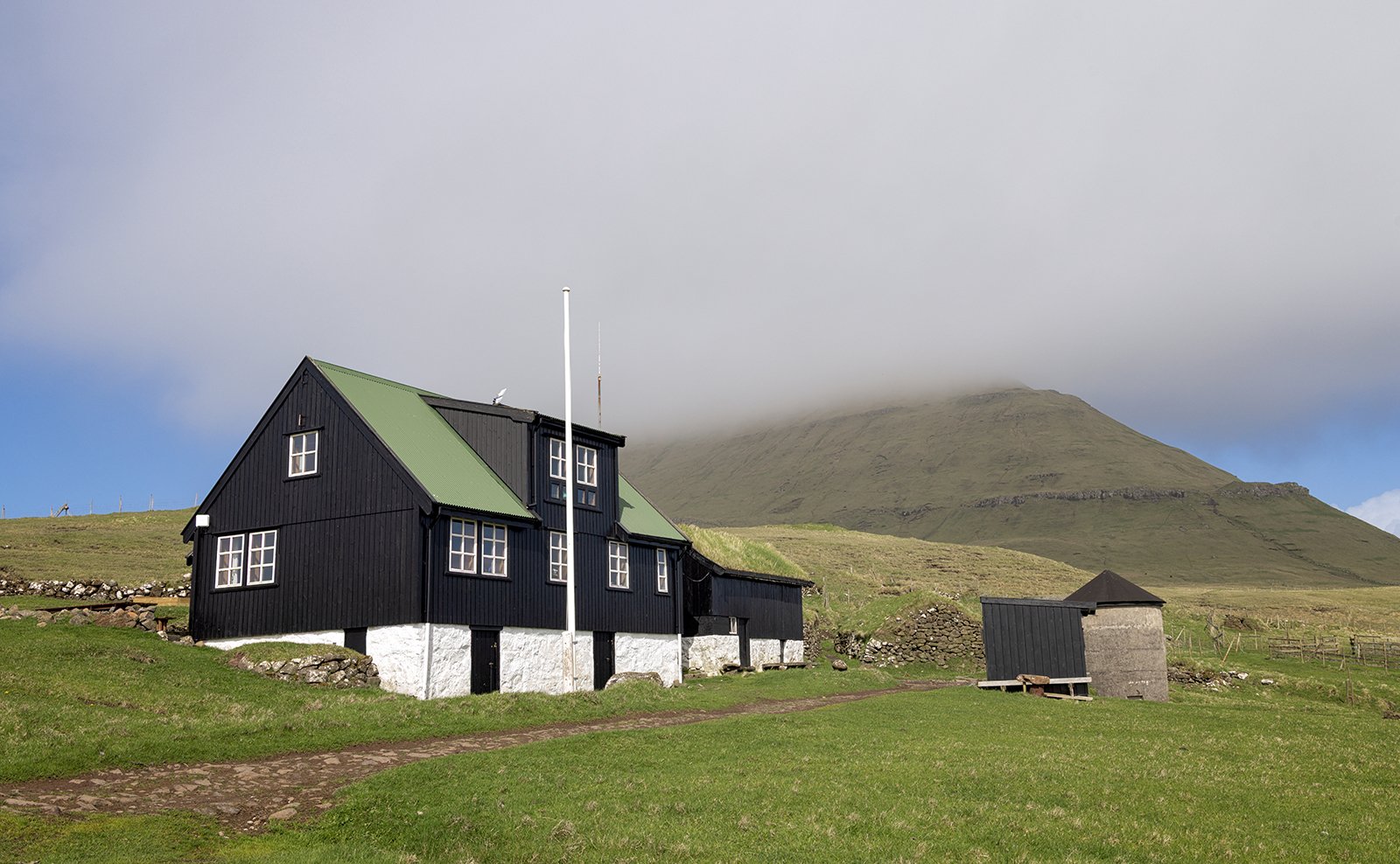
Caretaker House on Koltur
The settlement to the north of the Caretaker House has fallen into decay, so we did not explore it much, but the ruins did make a good backdrop for pictures of the sheep.
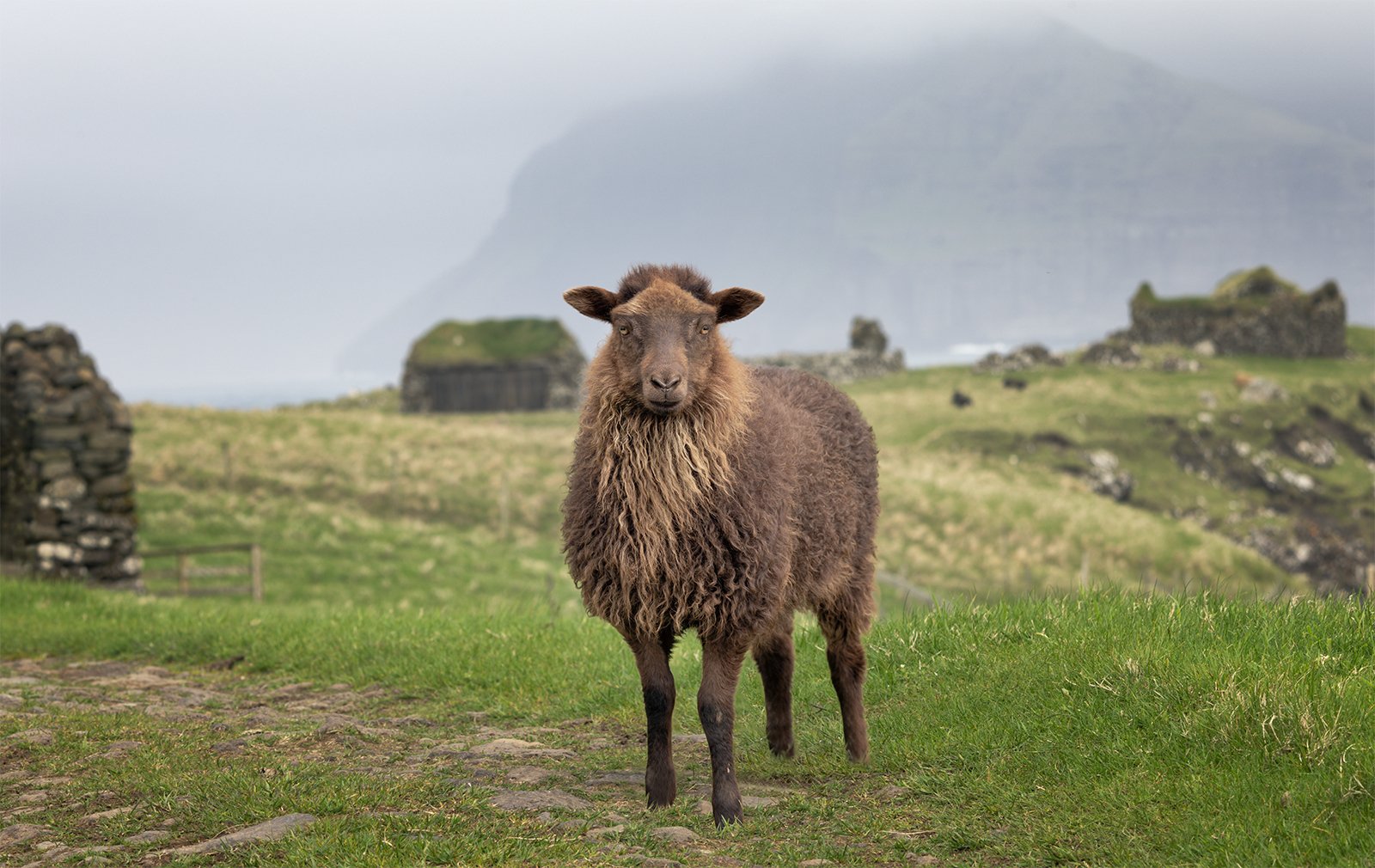
Sheep On Koltur
Between the two settlements is an attractive small beach, and as the sun came out, we spent a lot of time photographing the waves on the beach, with Kolturshamar in the background.
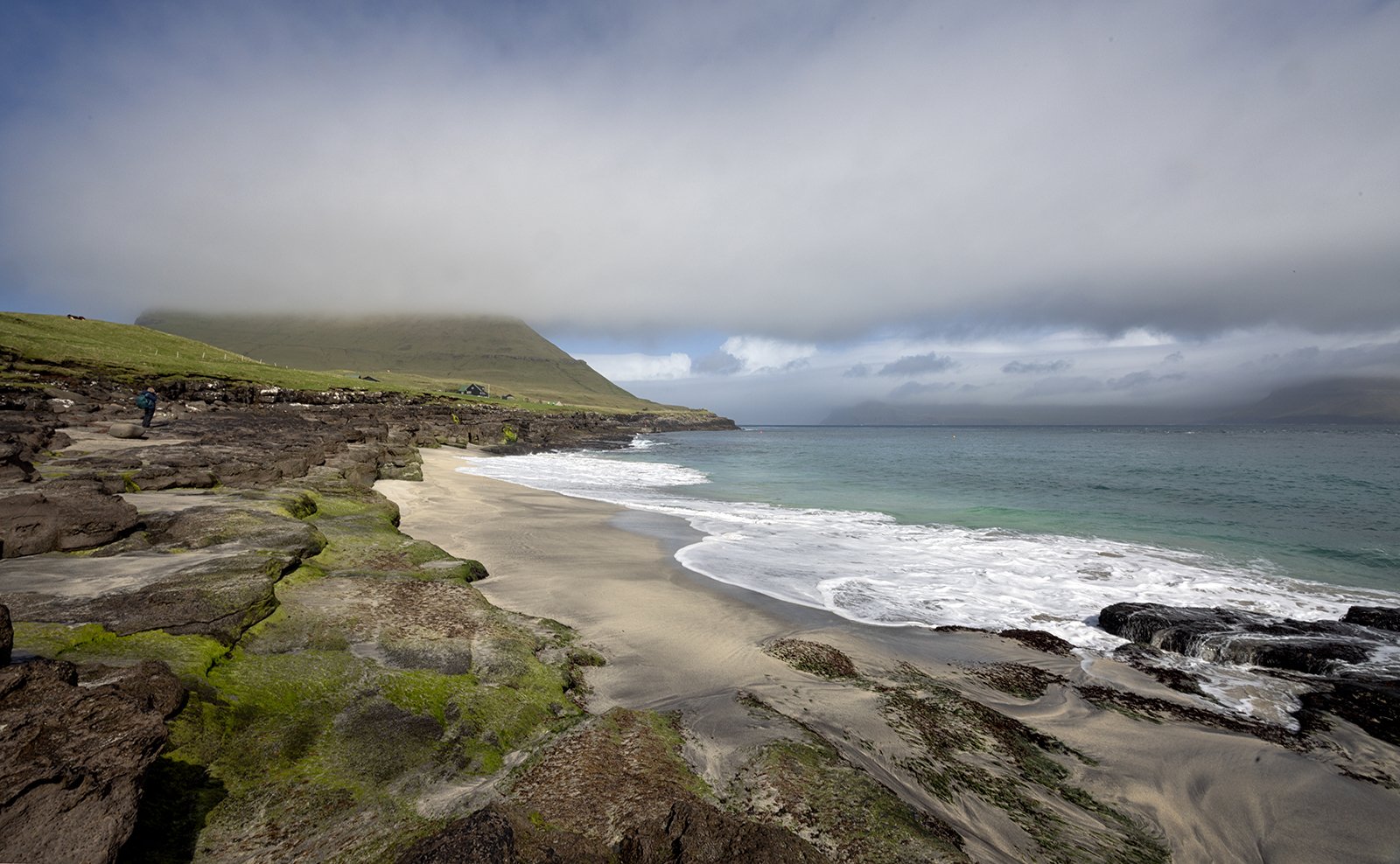
Koltur Beach
Although the sun was shining, the cloud stubbornly stayed on top of Kolturshamar all day, but it did lift a little in the early afternoon.
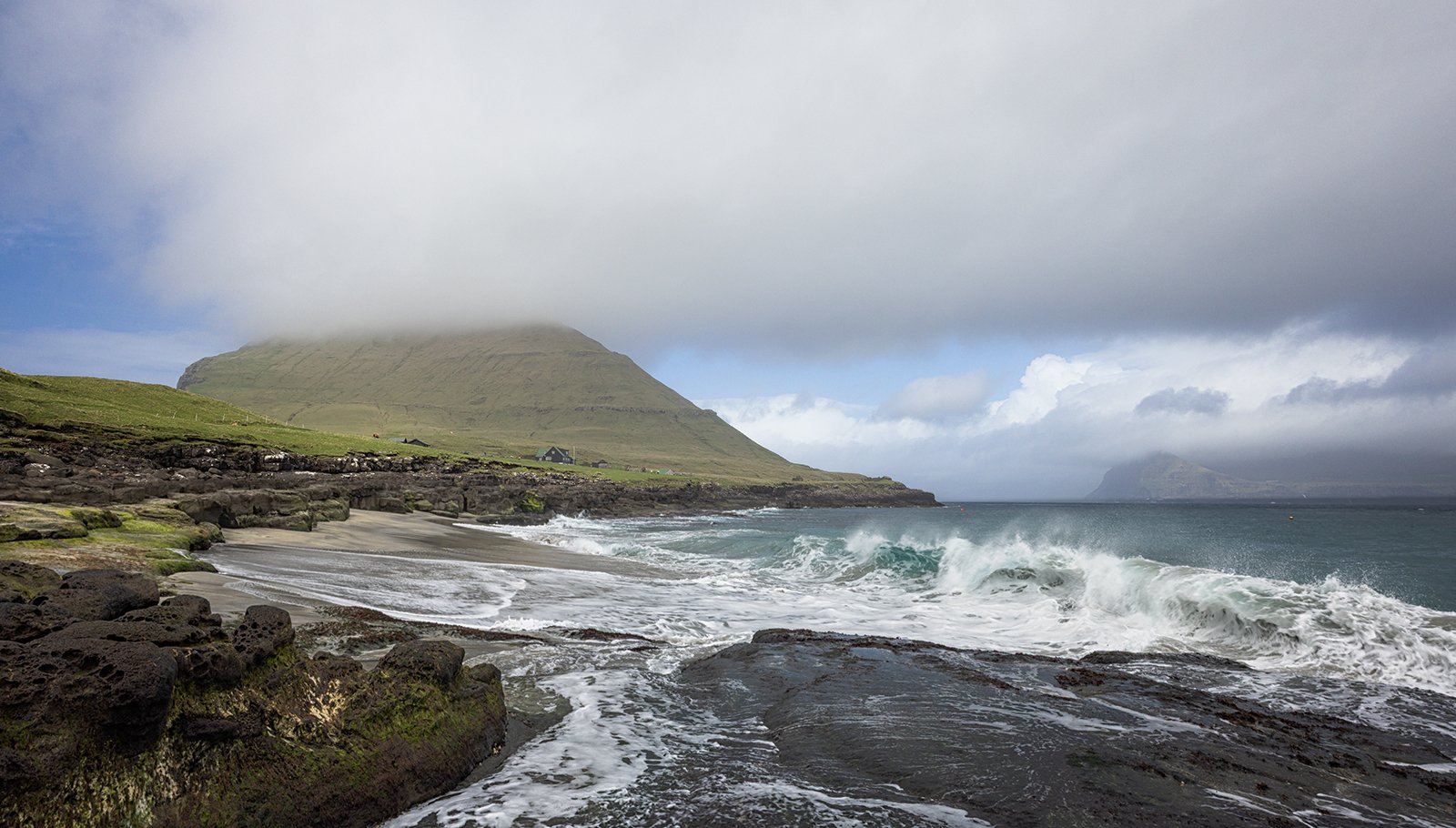
Koltur Beach
South of the beach is the second settlement, known as Heima í Húsi, which is rather better preserved, and gives an idea of what farming life was like in the small settlements across the Faroe Islands until quite recently.
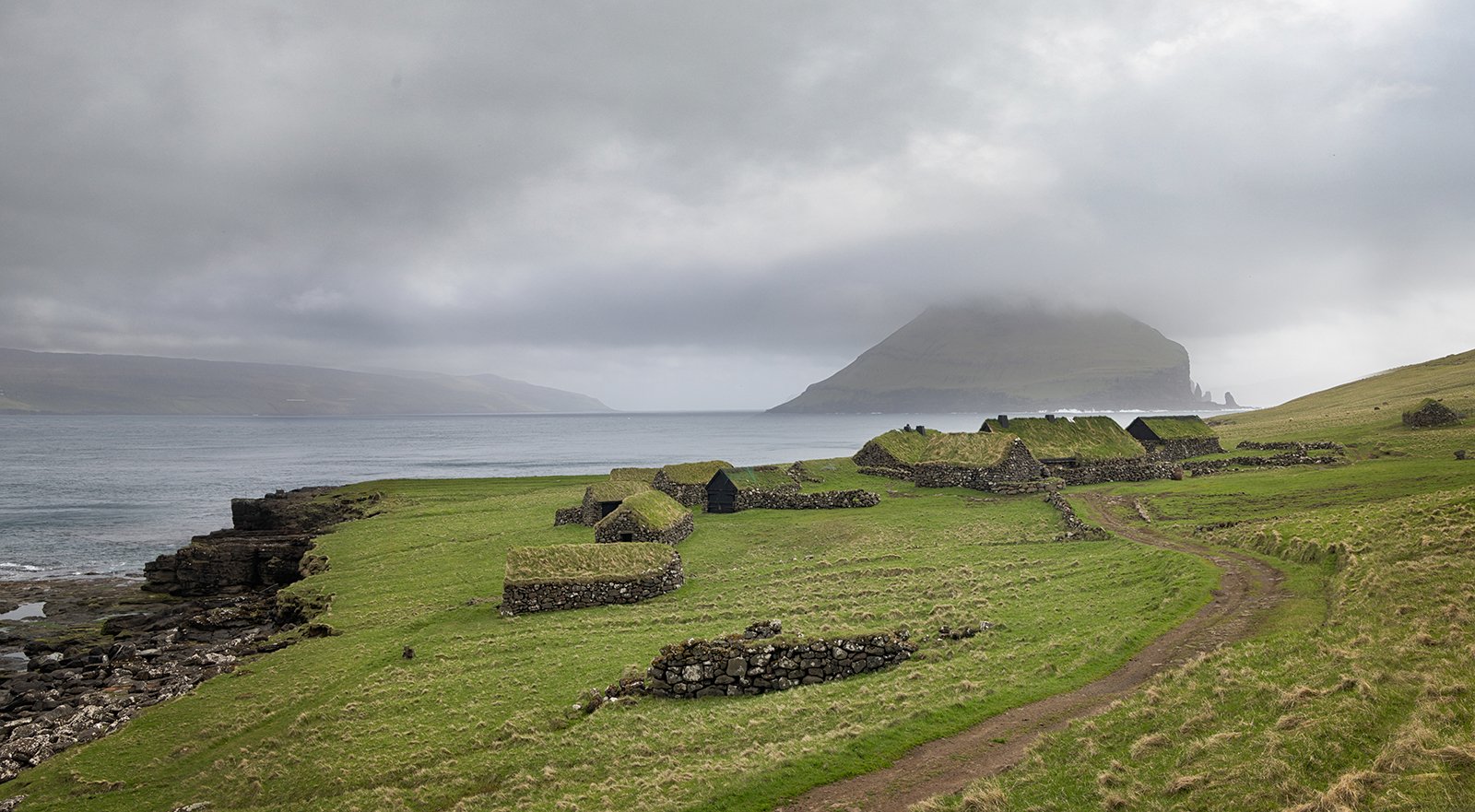
Heima í Húsi
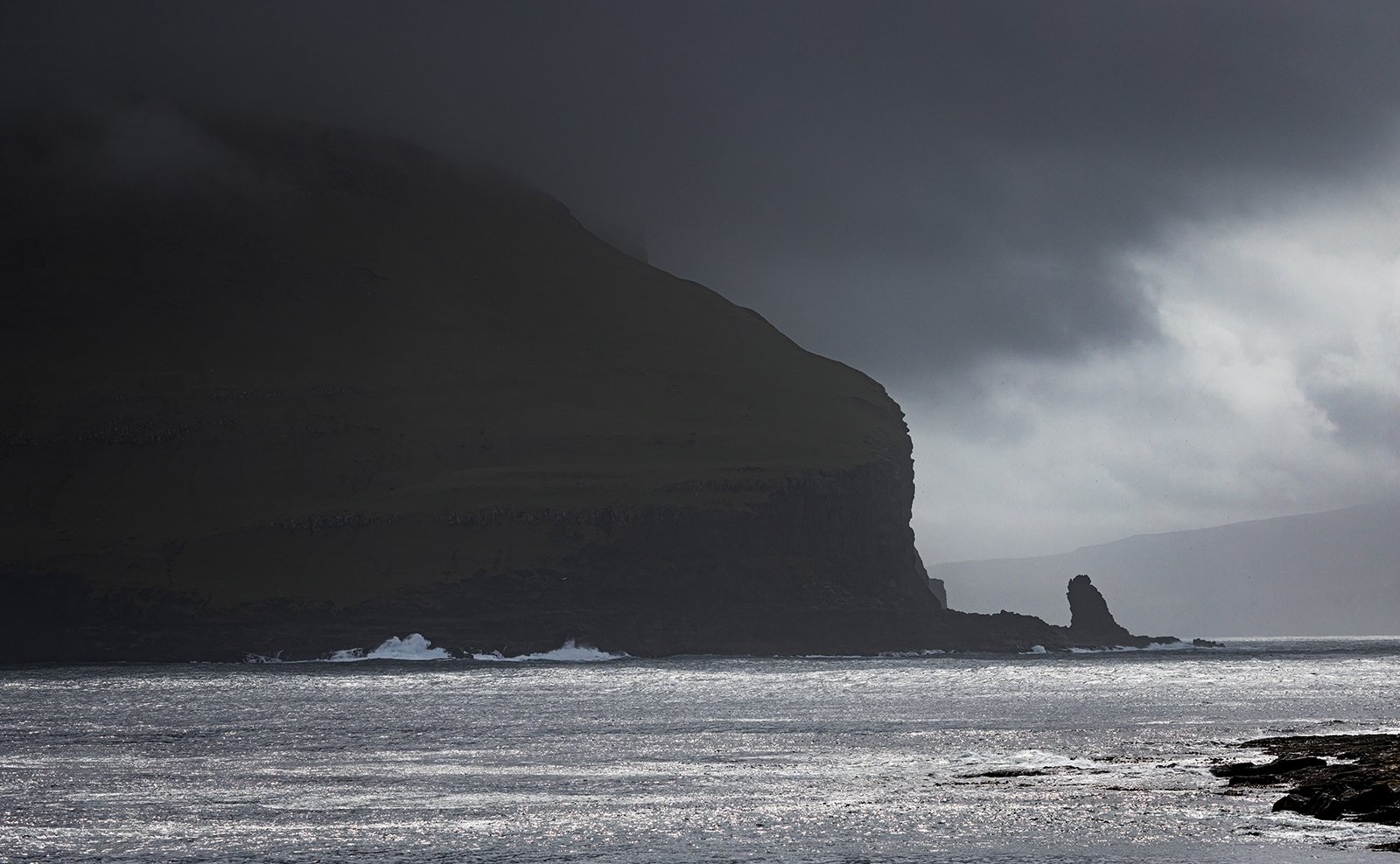
The island beyond Heima í Húsi in the picture above is Hestur, which also looks forbidding from the north, especially when dark clouds add to the drama of the seascape.
Hestur from Koltur
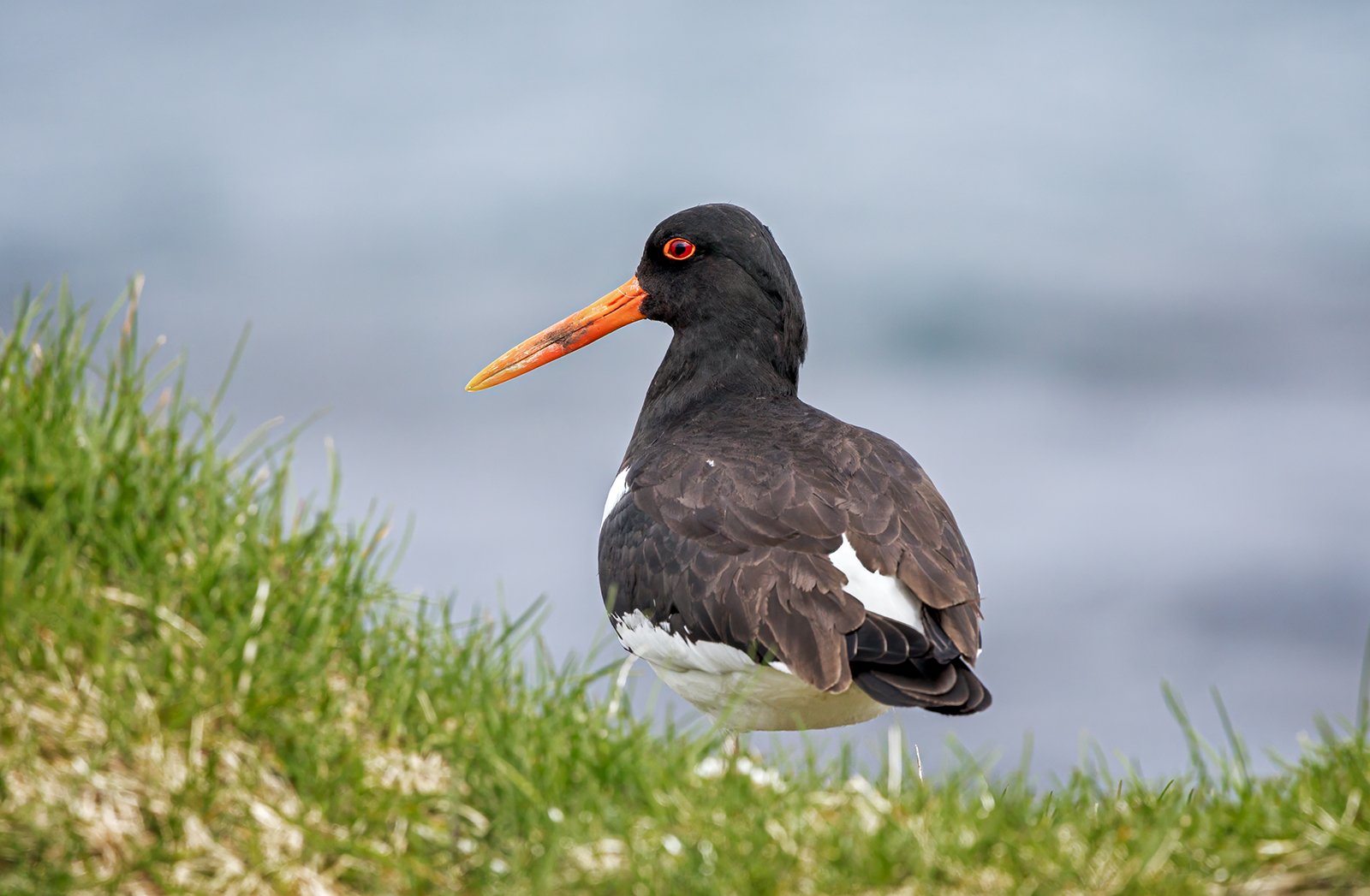
Koltur is known for its bird life, with significant colonies of seabirds nesting on the cliffs of Kolturshamar. However the only birds we saw in any numbers were Oystercatcthers, which are quite common across the Faroe Islands.
Oystercatcher On Koltur
After exploring the island, it was time to get kitted up again for the departure. Fortunately the tide was higher. meaning t eboat was a bit closer to the ladder than when we arrived.
Carol Ready For The Boat Crossing
Kirkjubour
When we returned to the main island of Streymoy, we decided to drive south down the West coast of the island to the village of Kirkjuboar. Although only a small village, Kirkjuboar has some of the most important historical buildings in the Faroe Islands.
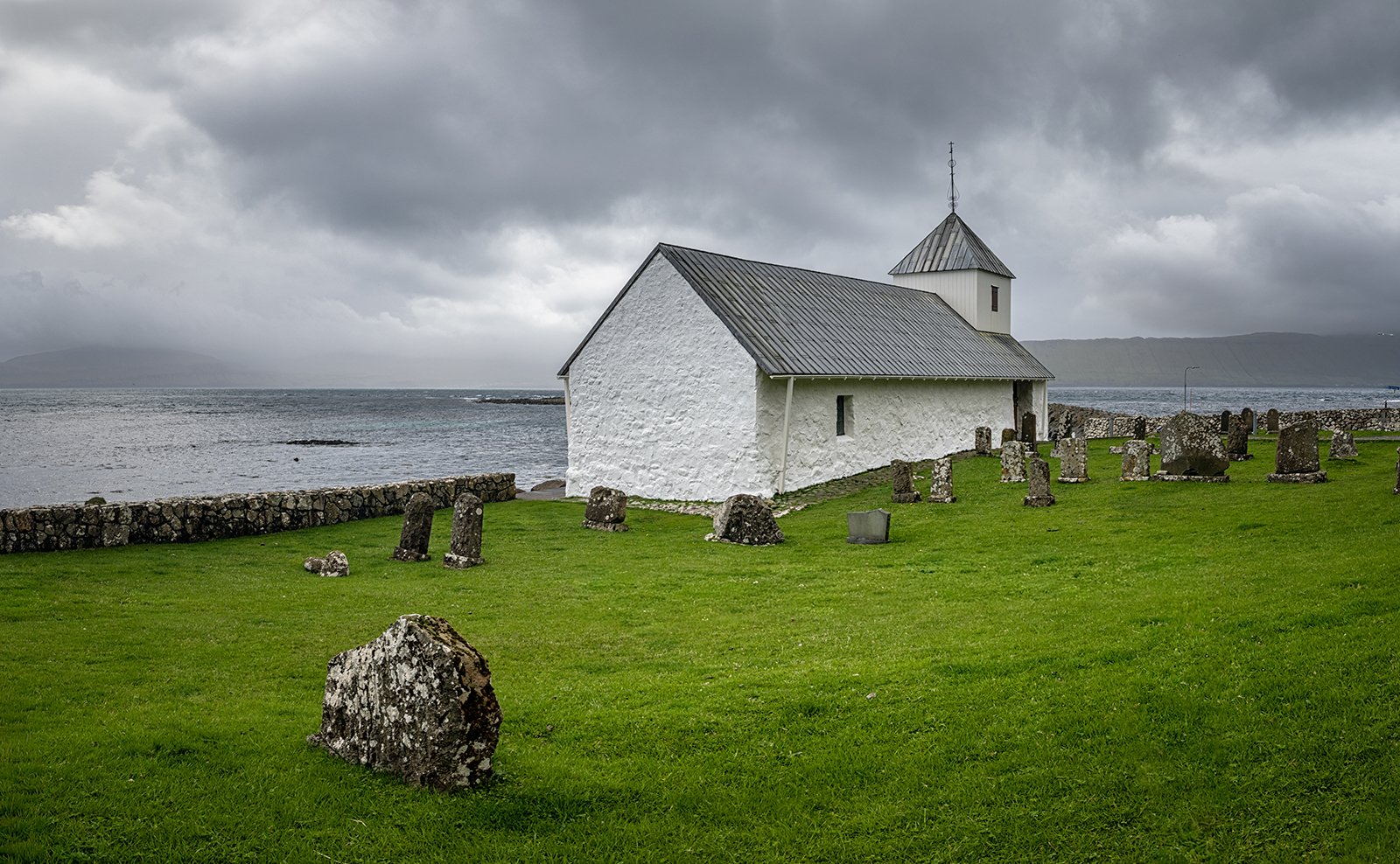
The church of St Olaf dates from around 1250AD, and is the oldest church still in use in the Faroe Islands.
Saint Olav’s Church
Close by is the Magnus Cathedral, which dates from around 1300AD. This is the largest medieval ruin in the Faroe Islands. The cathedral probably fell out of use following the Reformation in 1537, after which the building has decayed. In the picture below it can be seen with St Olaf’s Church to the left.
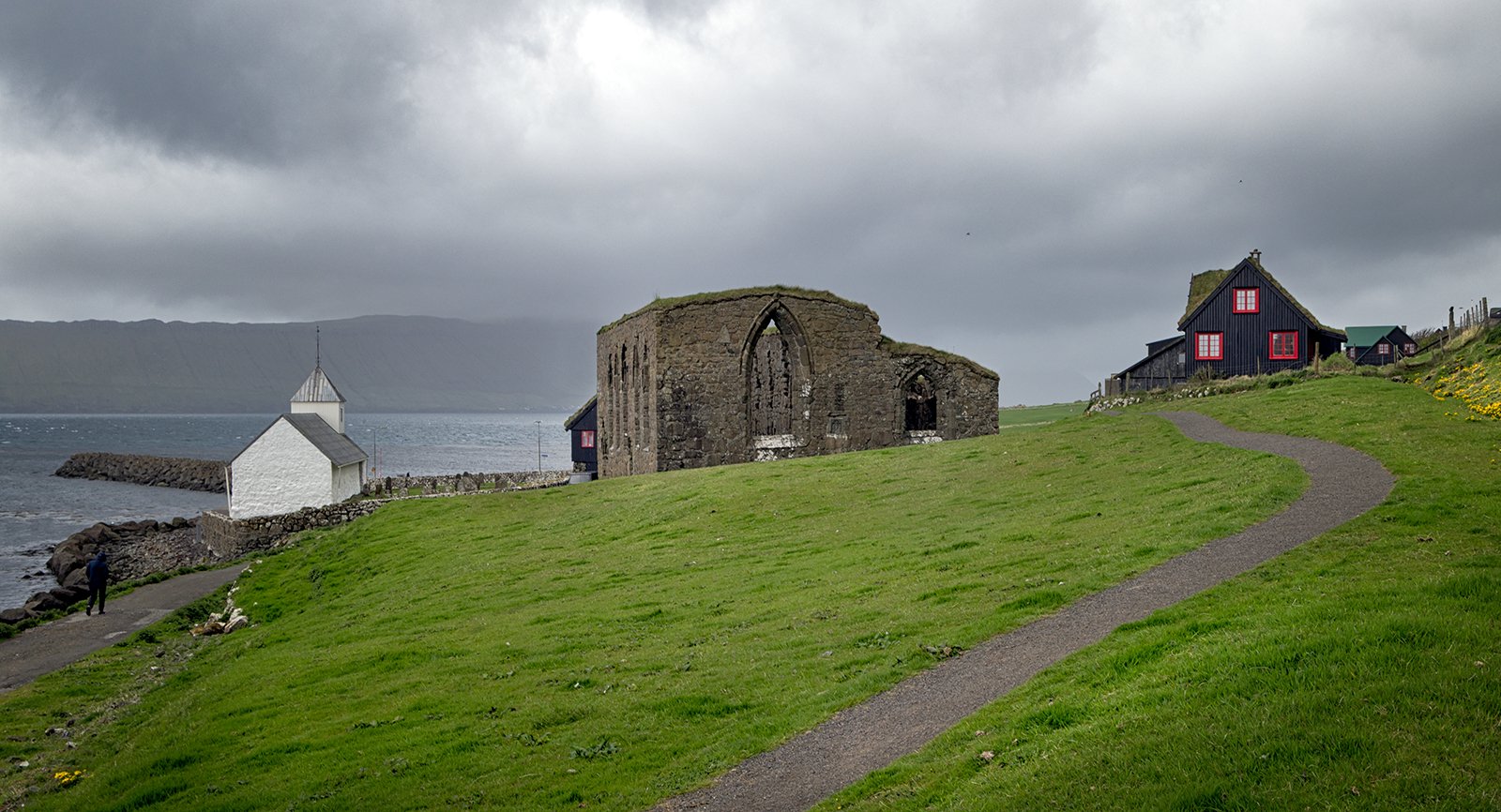
Magnus Cathedral
The final historical building is Kirkjuboargardur, one of the oldest wooden building buildings in the world that is still inhabited. This is a large farm building, which is also known as King’s Farm, which hints at its historical importance as one of the largest farms on the island. It required a wide angle stitched panorama approach to fit the building into the image below.
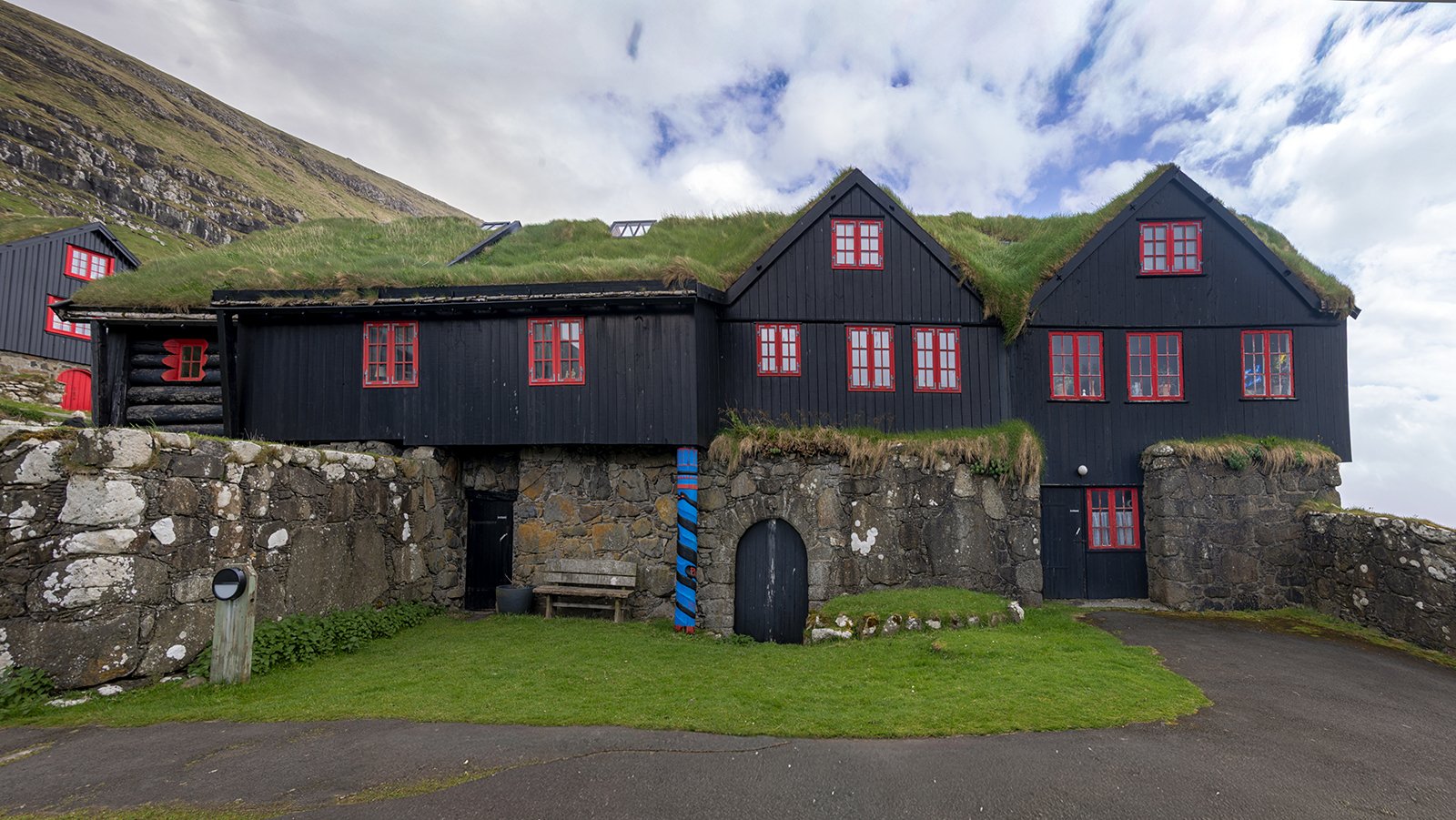
Kirkjuboargardur
After visiting Kirkjuboar, we returned to our hotel at Torshavn.