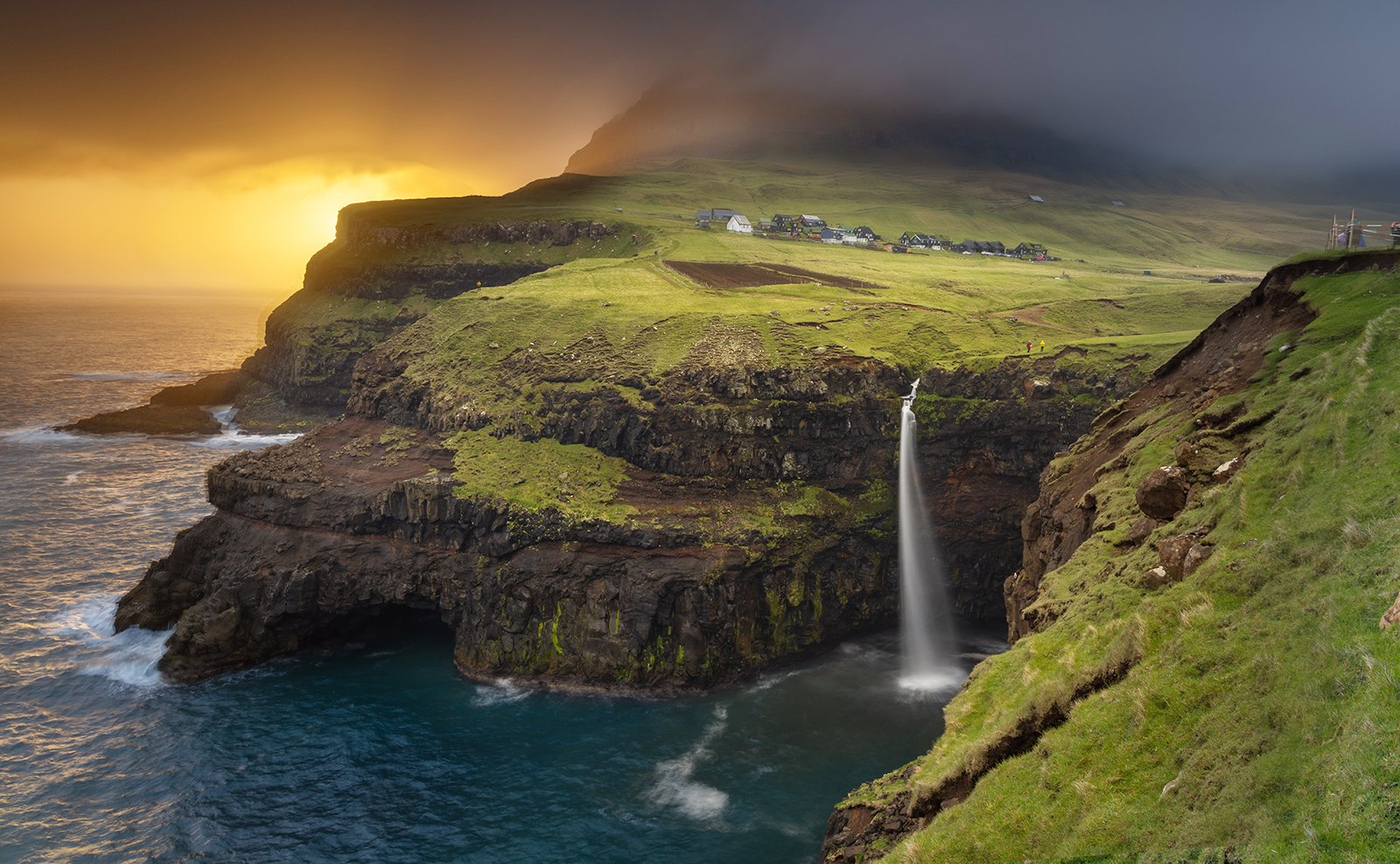
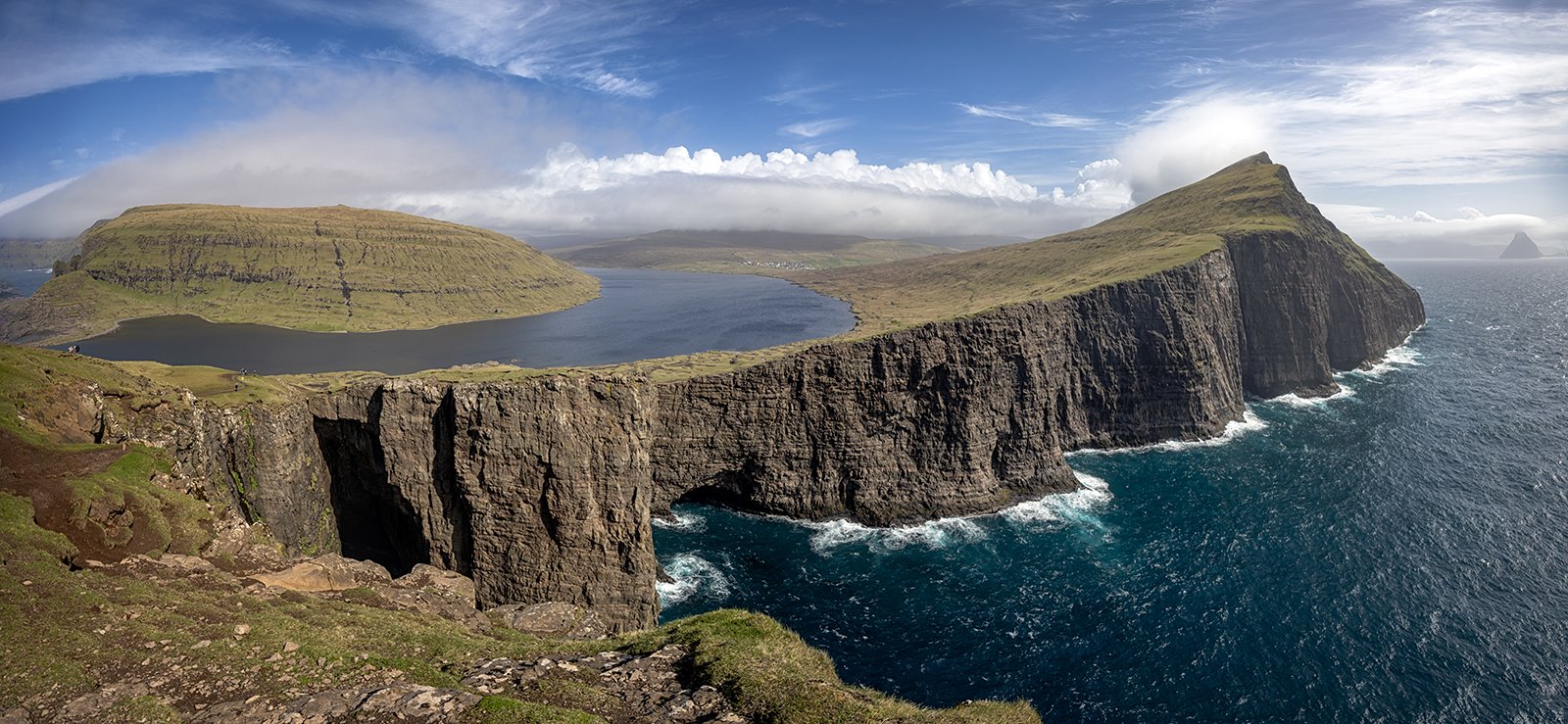
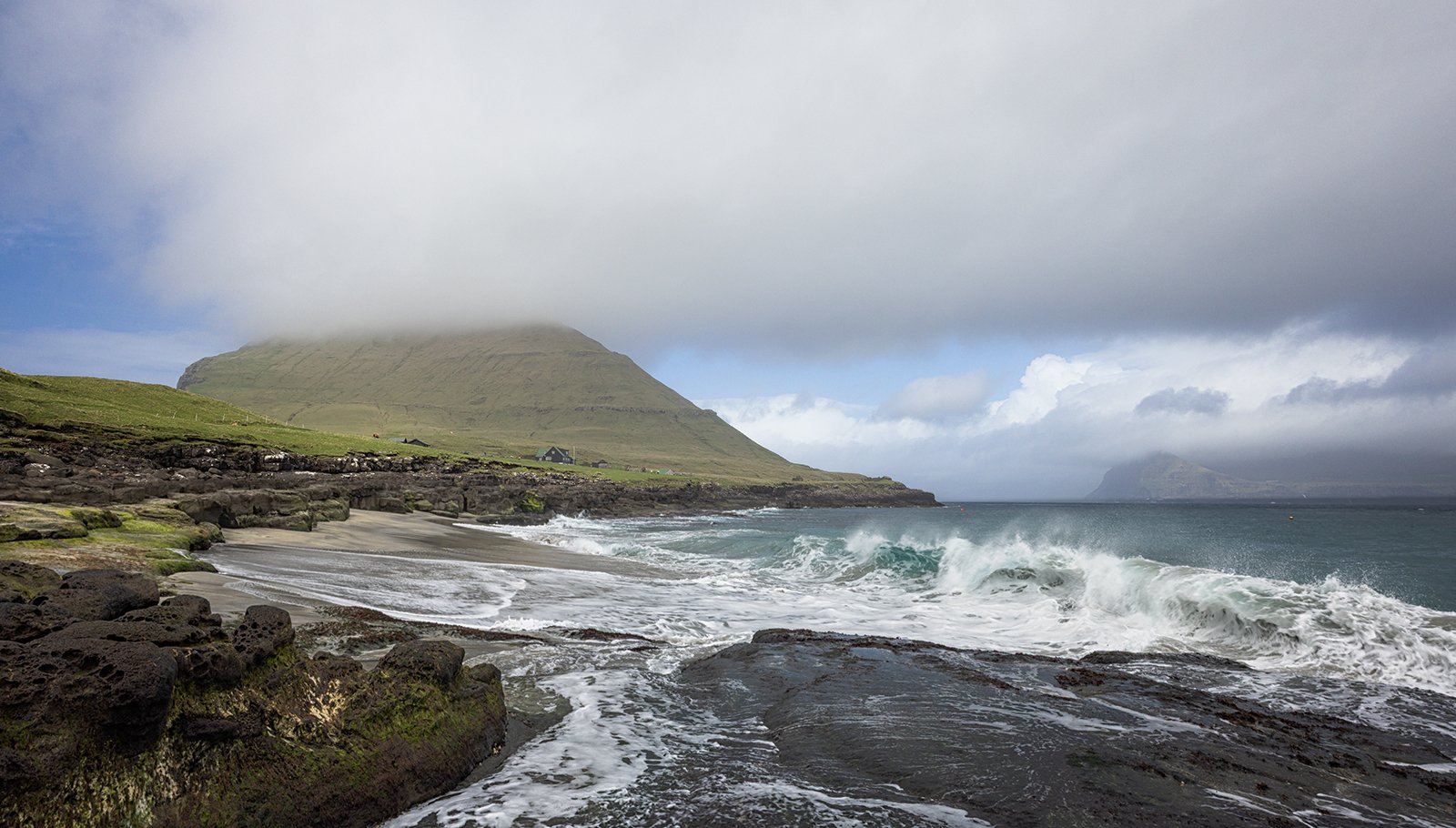
2026 – Faroe Islands
22nd May 2026
Day 1 – Mykines Island
Our first three days in the Faroe Islands would be spent on the island of Vagar, where the airport is located. We were staying at Hotel Vagar, which is effectively the airport hotel, so we could watch the planes taking off from the hotel restaurant. As there are only a few planes each day, this did not create a noise nuisance, but actually added some interest to our stay.
As part of our planned itinerary, we were due to visit the island of Mykines today. Mykines is the most western of the Faroe Islands and can only be reached by boat. The island has no cars, only one village and about 15 permanent residents. What it does have is one of the largest puffin colonies in the world, making it a magnet for bird-watchers. Unfortunately onm the day of our visit, the weather was very overcast, with lots of low cloud and drizzle, which did rather spoil the trip.
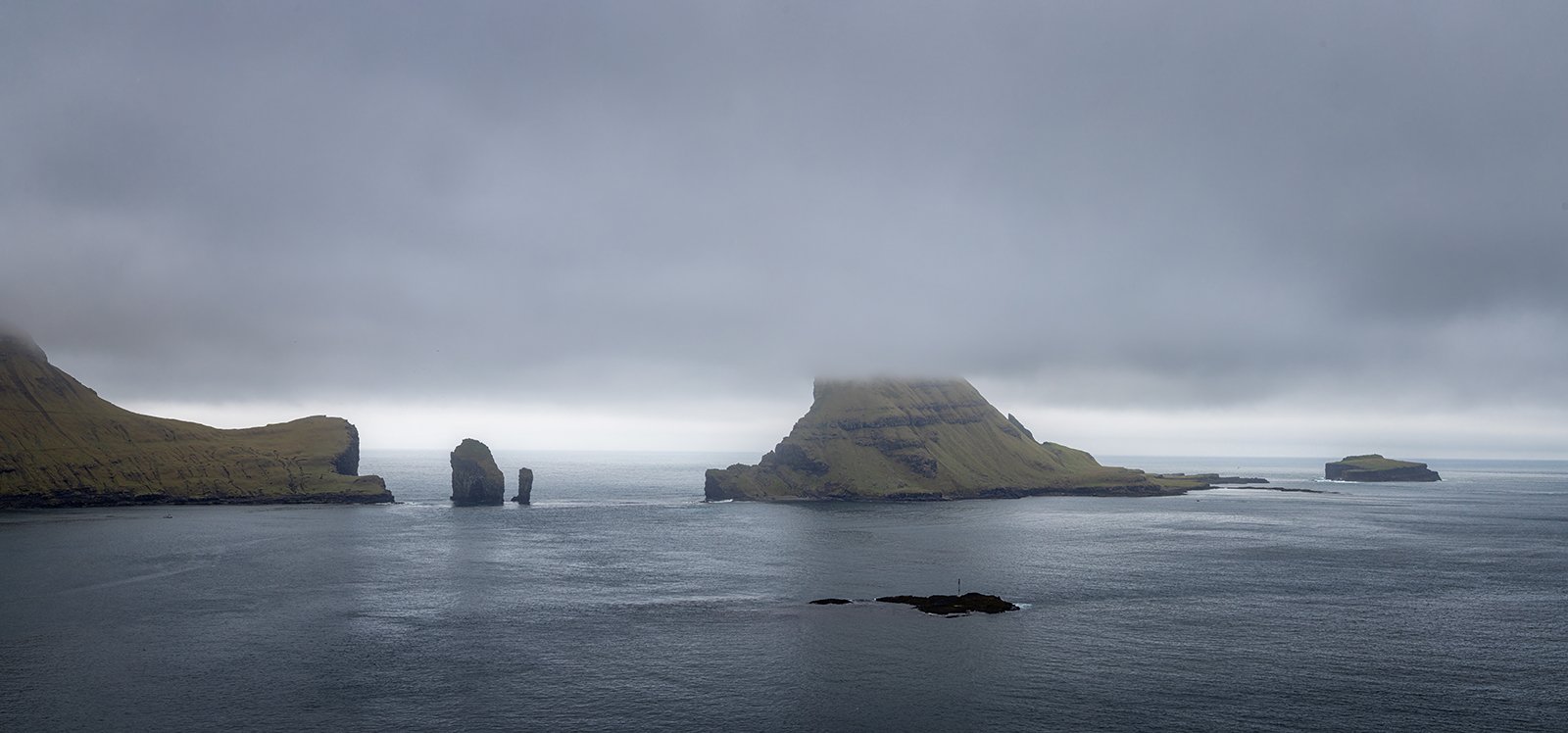
The boat trip to Mykines leaves from Sorvagur, which is about 2 miles from our hotel, and takes about 45 minutes. It first visits the rock arch of Drangarnir and sails past the island of Tindholmur before making for Mykines, however the weather conditions meant that most of that impressive scenery was lost in the murk.
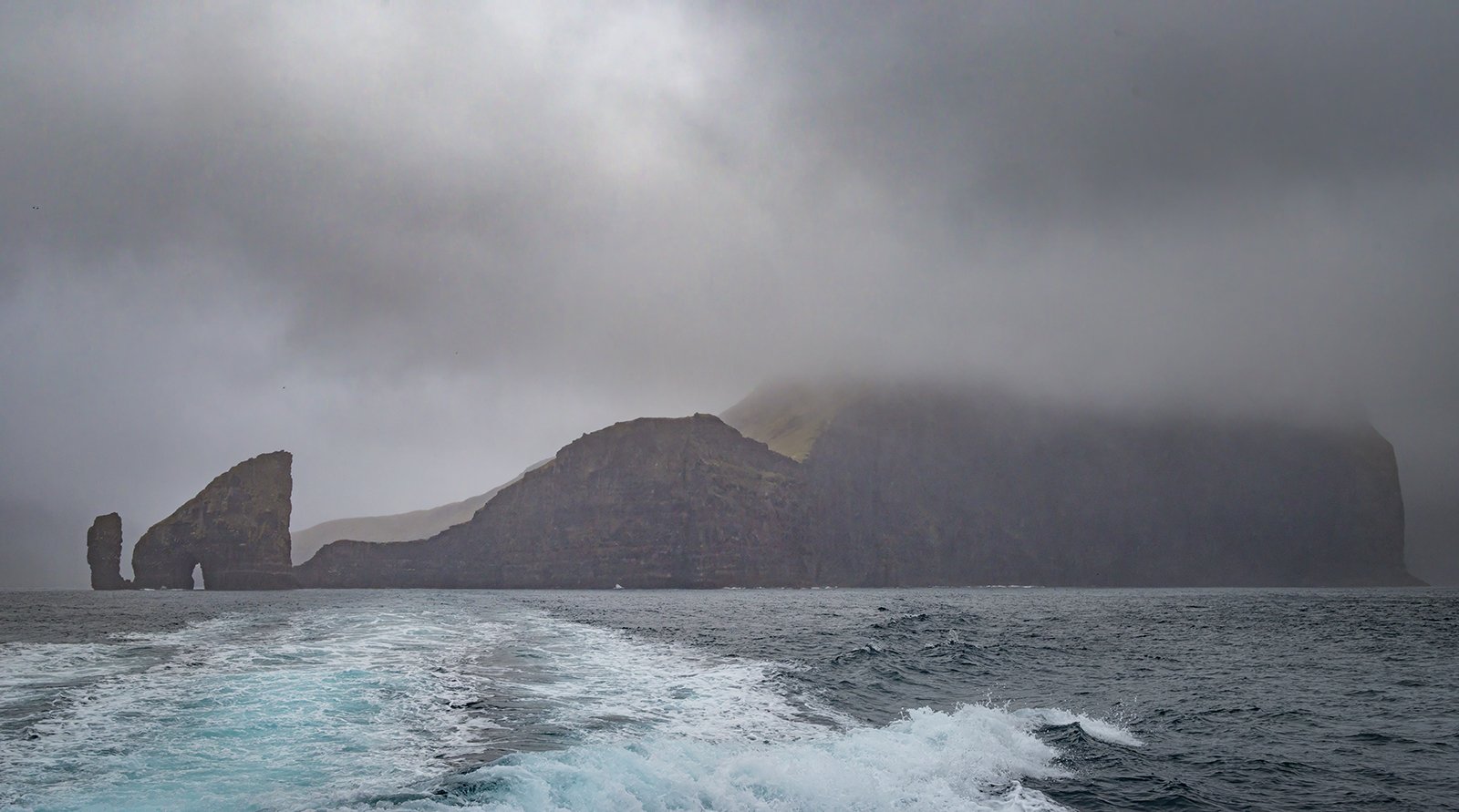
Drangarnir Rock Arch
Once on the island, we were met by our guide for the day. Due to the protected nature of the island, visitors must be accompanied by a guide, so during the summer months the permanent island residents are joined by a number of guides who escort the tourists. We were rather fortunate in that our guide was a young woman who had been born on the island. In fact when we visited the small school, she explained that she and her brother had been the last two children to be taught there, and the teacher was their mother, who still lived on the island.
From the small harbour, we climbed up to the small village of Mykines, which gave us our first view of the traditional turf roofed Faroese houses.
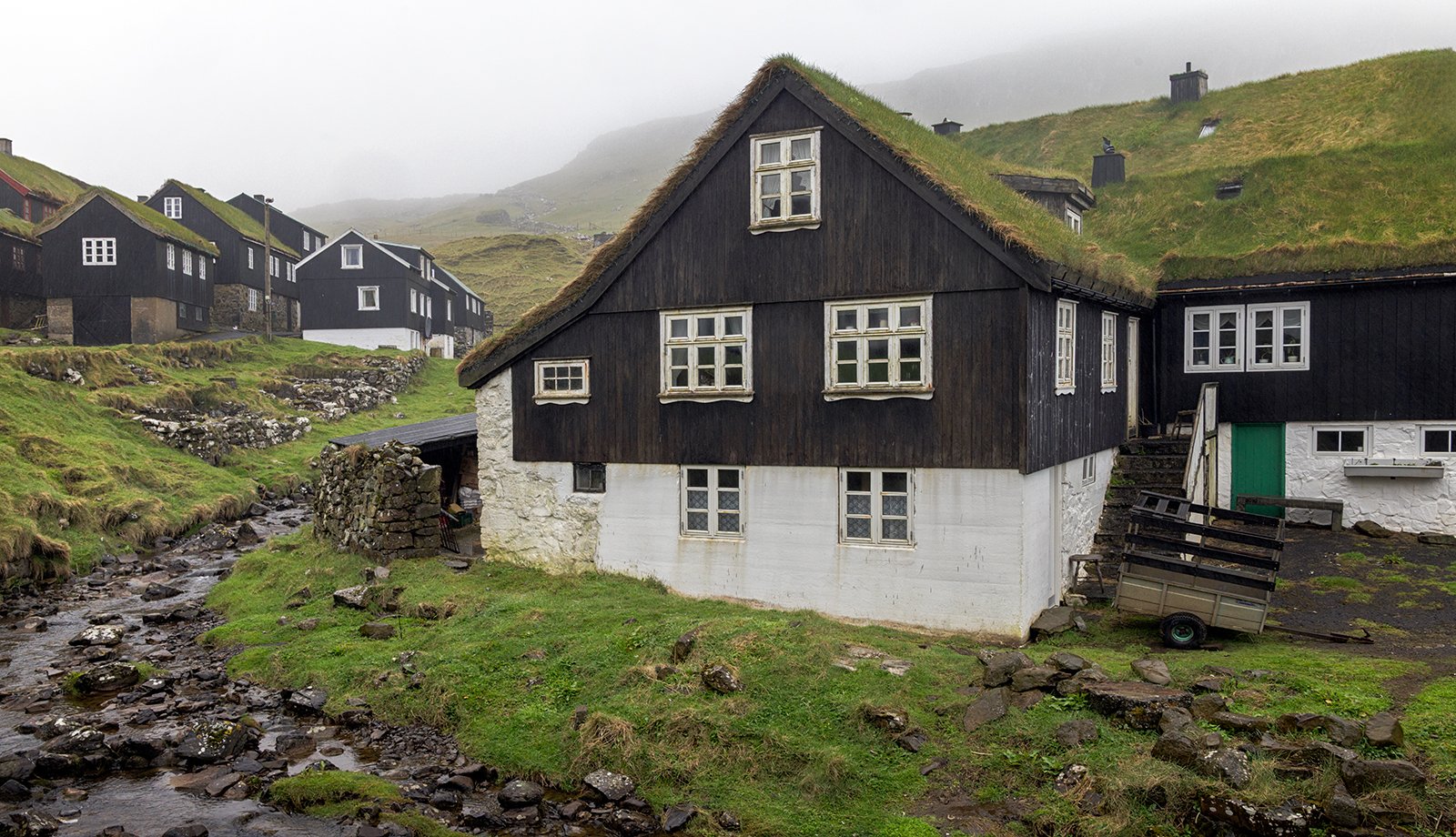
Mykines Village
From the village, we walked out to east to reach Kumlar viewpoint. From here there are impressive views of the cliffs surrounding Mykines village, but unfortunately much of the view was affected by low cloud and misty rain.
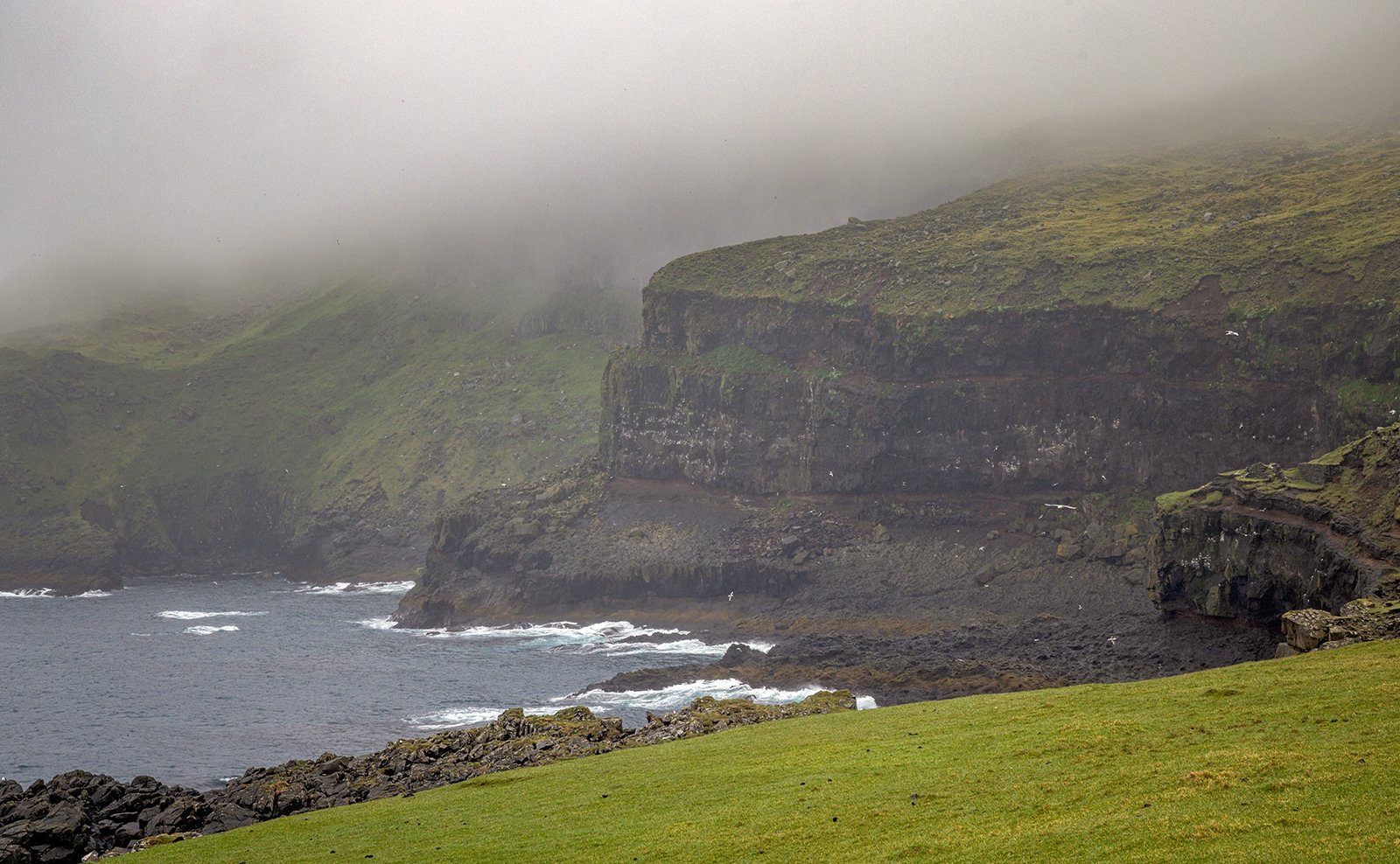
View From Kumlar
We did however enjoy watching Kittiwakes flying past, most of them carrying nesting material. I usually carry a light 400mm lens in case of any chance encounters with wildlife, so it came in useful here.
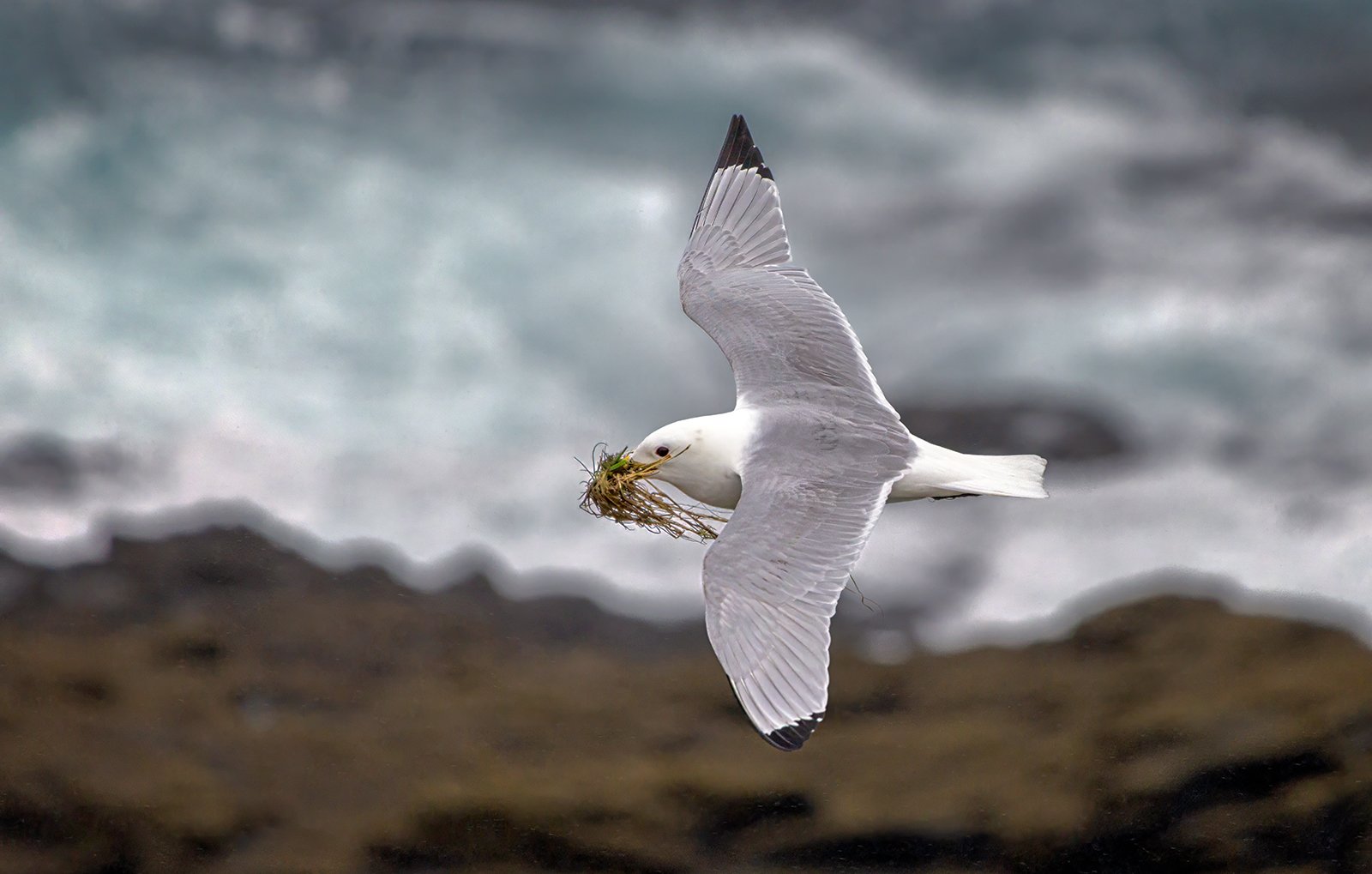
Kittiwake With Nesting Material
From Kumlar we returned to the village, then climbed up towards the puffin colony, which is on a ridge to the west of the village. As we climbed higher, we were enveloped in the cloud, so conditions became very misty, but we could see the huge number of puffins nesting in the area. They were not troubled by our presence, so we could get some close-up shots, which provided a reasonable quality, despite the misty conditions.
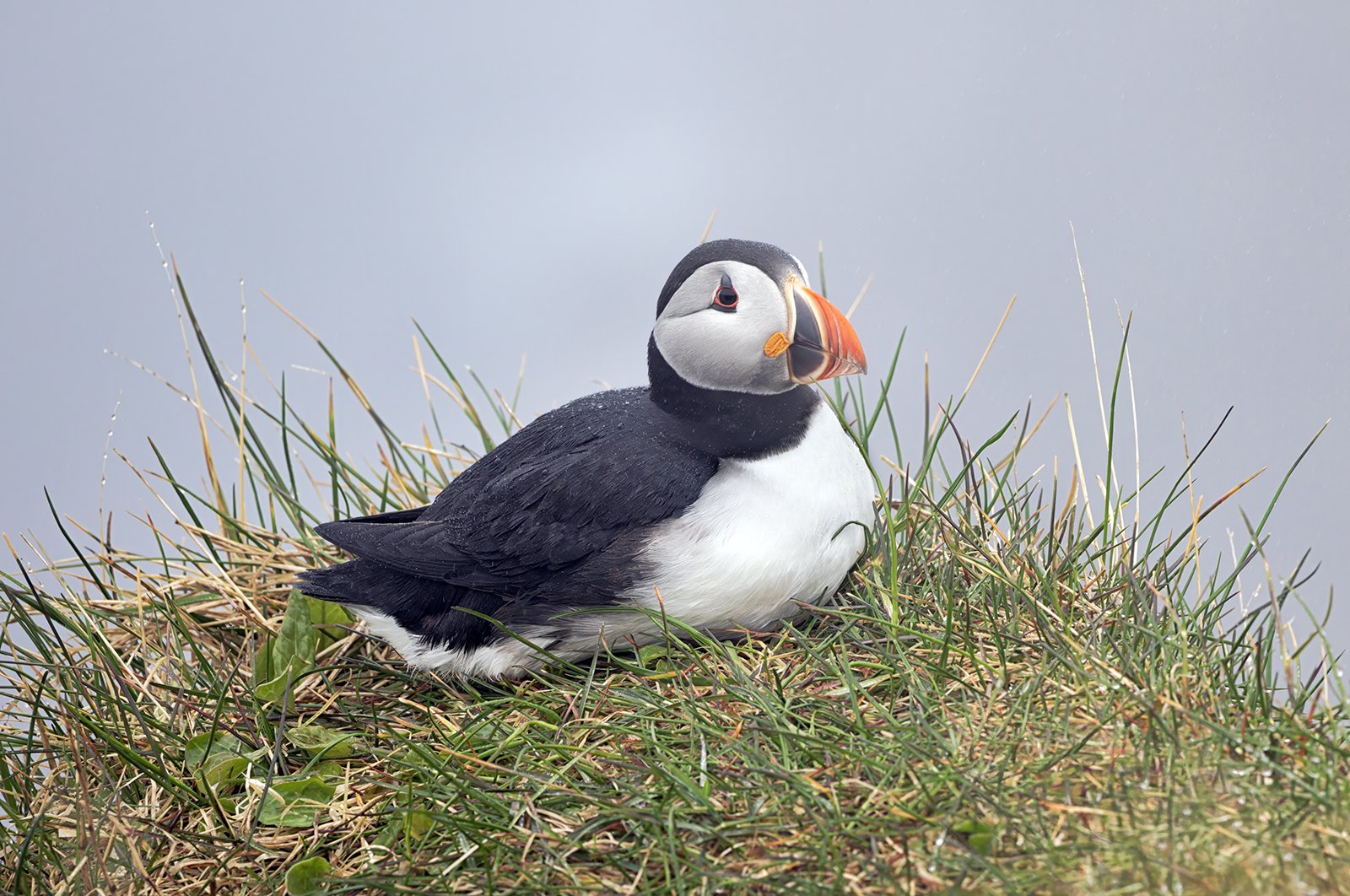
Nesting Puffin
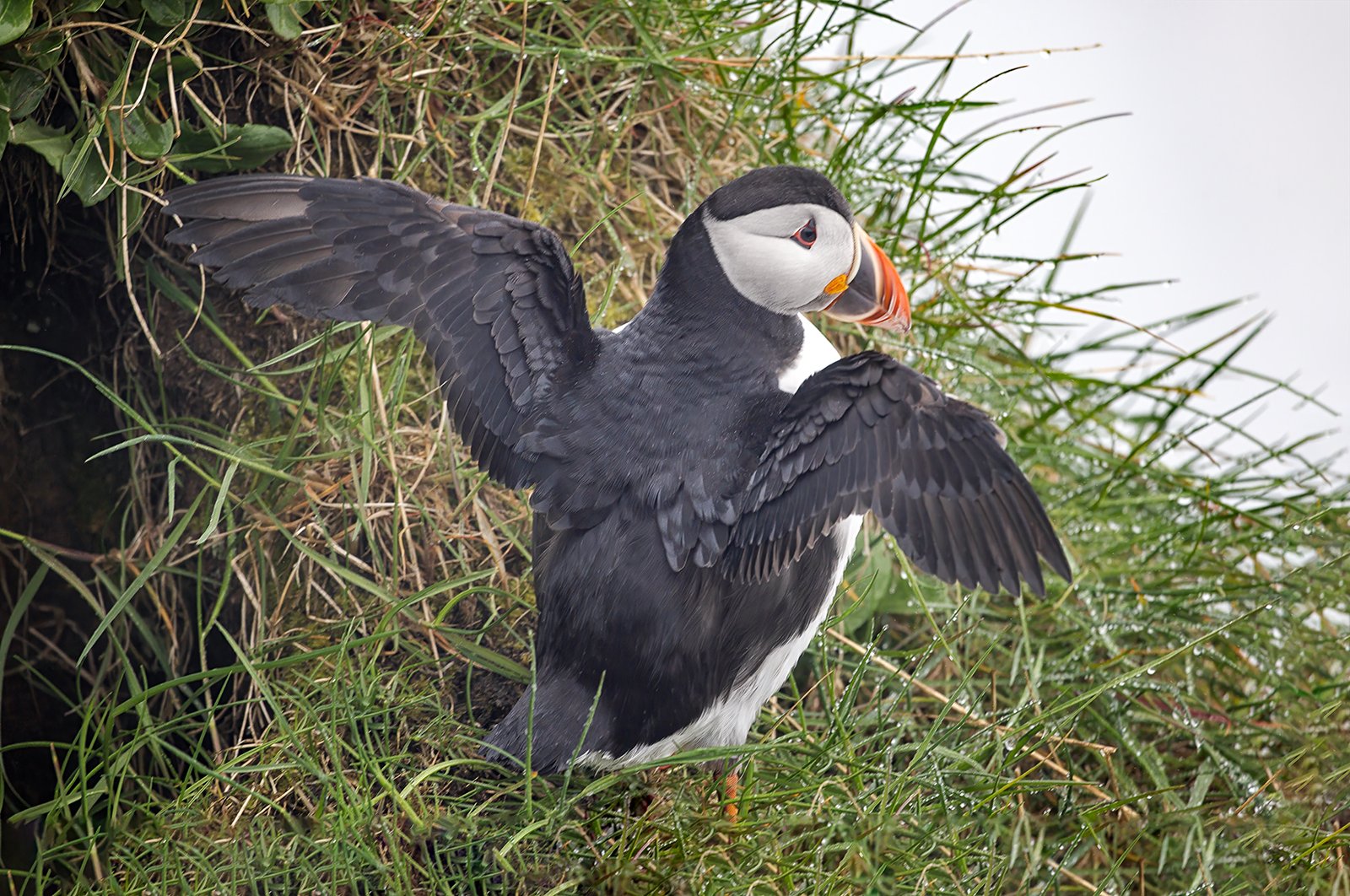
Puffin Spreading Wings
After visiting the puffin colony we returned to the village where we visited the school and our guide told us about her schooling on the island. She had to leave to go to secondary school and later university, but still returns to the island during holidays to work as a guide, and I think she missed the quiet and secluded life of the island.
The return boat trip was just as dark and overcast as the way out, but this time we sailed close to the north side of the fjord, which gave us a view of the Skardsafossur waterfall. This is next door to the more famous Mulafossur, and is not quite as high at about 100ft.
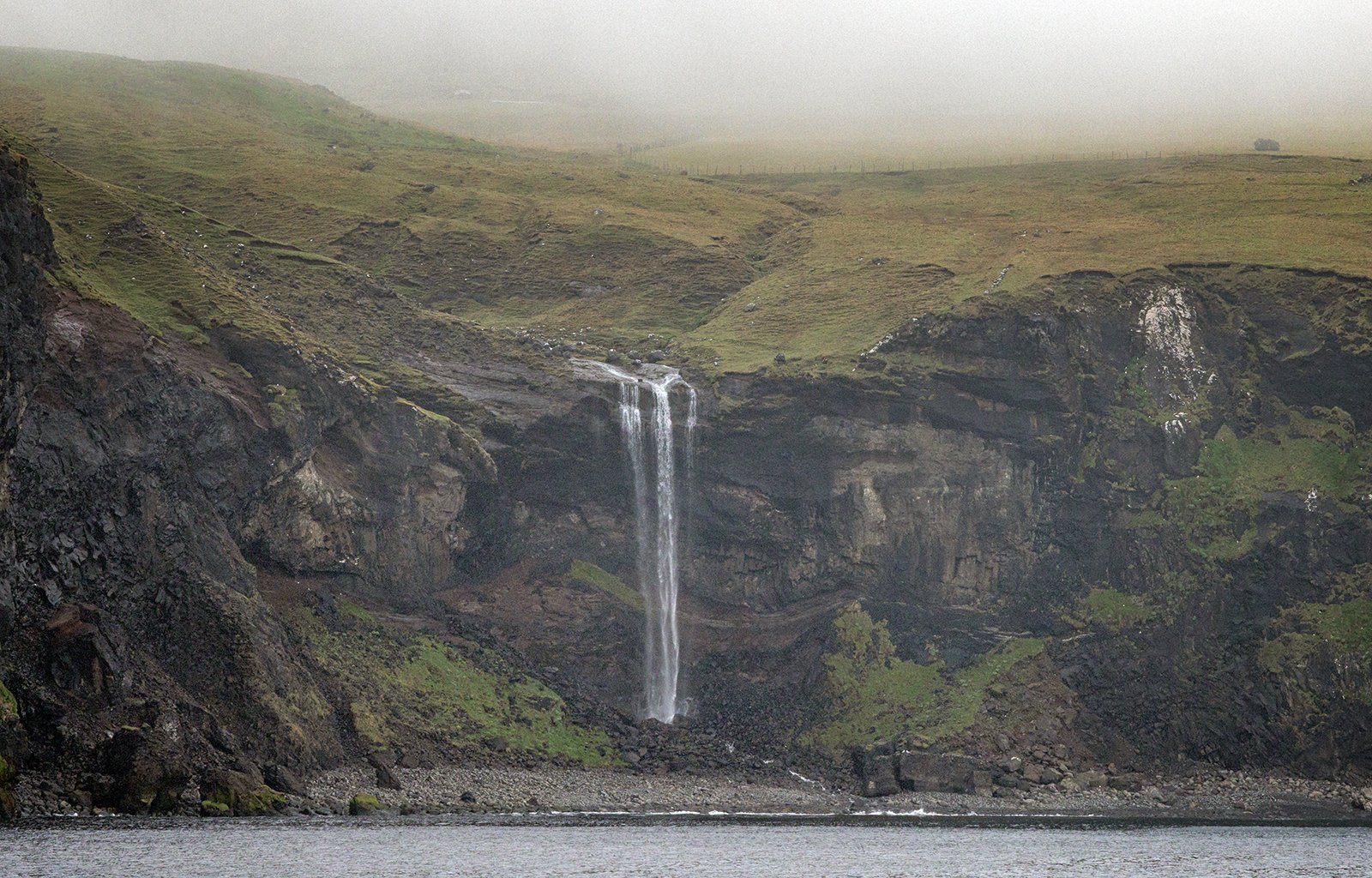
Skardsafossur Waterfall
Overall we enjoyed our trip to the quiet island of Mykines, but it could have been so much better if the weather had been kinder. As the trip involves a boat trip booked months in advance, it was not somewhere we could return to on a better day. Fortunately the weather improved over the course of our holiday.
Faroe Islands – 2026 - Links To Posts